Get Full Government Meeting Transcripts, Videos, & Alerts Forever!
Get email alerts on the Zoning Policy Debate topic
No spam. Unsubscribe anytime.
Commission debate focuses on whether purchase of constrained lot creates 'self-imposed' hardship
Summary
Commissioners split over interpretation of criterion 3 (self-imposed hardship): one argued buying a constrained lot can be self-imposed, while staff urged a narrower interpretation that distinguishes purchase from intentional land division or alteration.
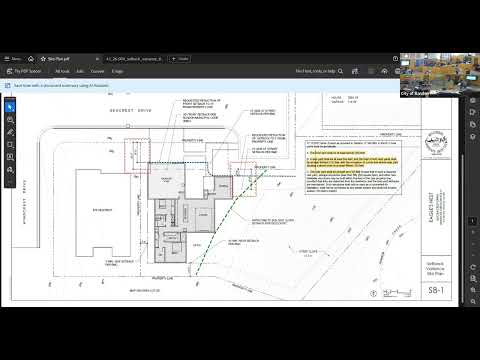
During deliberations on the Seacrest Drive variance, commissioners engaged in a lengthy exchange about when a property's condition counts as a self-imposed hardship. One commissioner argued that an owner who buys a constrained lot and then seeks a variance is responsible for performing due diligence before purchase and thus should not receive lenient treatment.
"If you buy a piece of property intending to construct something on it, is it not your responsibility to do your due diligence before you decide to build...I think the fact that due diligence was not done at that time makes it a self imposed issue," the commissioner said. Staff responded that their interpretation reserves 'self-imposed' for cases where the owner took actions (such as subdividing) that intentionally created an unbuildable parcel, and noted a three-part test that also considers whether the owner could reasonably have known the constraint. The exchange framed the main policy concern: whether approval in this case would create a precedent for future variance requests from purchasers of constrained lots.