Get Full Government Meeting Transcripts, Videos, & Alerts Forever!
Get email alerts on the Bess Regulatory Gap topic
No spam. Unsubscribe anytime.
Speaker warns of regulatory gap for battery storage sited in floodplains
Summary
At a Dubois County forum, a commenter argued that no single agency currently exercises full oversight of BESS in 100‑year floodplains and urged legislative or administrative fixes; an industry representative cited recent state code language.
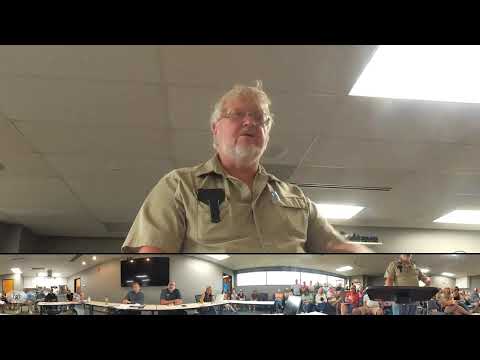
JC Lamb, a Honeyberg resident, told the forum that Du Bois County currently lacks a clear regulatory line for utility‑scale battery energy storage systems (BESS) located in the 100‑year floodplain.
"The Indiana Department of Homeland Security requires equipment to be elevated 2 feet above the 100 year flood flow... but only for systems subject to its approval," Lamb said, and he argued that state agencies do not exercise full floodplain jurisdiction and the county has no zoning body to impose site‑specific restrictions. "This is not a minor administrative detail. It is a failure of government that leaves residents exposed to catastrophic risks," he said, citing thermal‑runaway, toxic gas release and potential groundwater contamination if flooded batteries are not managed.
An EDP Renewables representative noted recent state statutory language addressing permitting for commercial solar and BESS and referenced Indiana code provisions discussed at the forum. County officials and commenters said remediation could require legislative or administrative changes assigning clear jurisdiction, mandating fuller environmental and safety reviews, or limiting BESS placement in floodplains until protections are in place.
No formal policy change resulted from the forum; attendees urged the county and state agencies to review the claims and produce public guidance.