Get Full Government Meeting Transcripts, Videos, & Alerts Forever!
Get email alerts on the Budget topic
No spam. Unsubscribe anytime.
RSU 18 administrators present first-draft FY27 budget showing 3.95% increase; board asks for fund-balance analysis
Summary
Superintendent Ben presented a first-draft FY27 budget with a proposed 3.95% increase and recommended cuts/additions that net two new student-support positions; board members asked for a detailed review of reserved fund balances and multi-year projections.
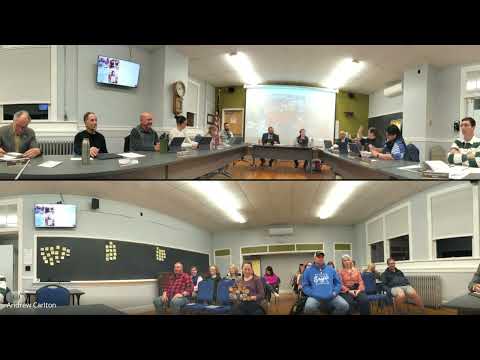
Superintendent Ben presented the district’s first-draft FY27 budget and framed it as informational: the proposal is roughly a 3.95% increase that reflects negotiated salary and benefit changes and targeted additions to student supports.
Ben said the district compared itself to 40–41 similar districts and found RSU 18’s per-pupil cost was $18,419 compared with a peer average near $20,000, and that “for every thousand dollars we spend, we generate 3.17 points of proficiency,” highlighting efficiency in the district’s outcomes. He identified major budget drivers as contracted salary and benefits increases, uncertainty in health-insurance rates (final value expected in April), and two proposed new positions: a dean of students at Mesulonsky Middle School and a school counselor at China Middle School. He also described operational reductions (line-by-line adjustments) that offset some increases.
Board members pressed for clearer, itemized forecasts and a plan for the district’s fund balances. One board member noted the district’s unassigned fund balance sits around 3.5% and suggested a public briefing on what each allocated reserve is for and how much is available. Ben said the presentation would be posted on the district drive and asked board members to submit specific line-item questions by email ahead of the next, budget-focused meeting.
The board discussed tax impacts using a $100,000-home example and town-by-town assessments Ben calculated from valuation trends. Ben gave sample impacts: "If you break that down quarterly, that's $5.70. If you break it down by month, that's a dollar 90 increase on taxes," and then provided town-specific examples (e.g., $43.62 annual impact for China on a $100,000 valuation in his slide). He said the proposed budget uses an $800,000 carry-forward fund-balance assumption and cautioned that repeatedly drawing on reserves will reduce long-term flexibility.
Next steps: the presentation was informational; board members asked administration to (1) prepare a clear breakdown of each allocated fund balance and its purpose, (2) provide pro forma projections for FY28–29 that show the impact of negotiated contracts, and (3) supply targeted line-item clarifications before the next meeting. No budget vote occurred at this session.