Get Full Government Meeting Transcripts, Videos, & Alerts Forever!
Get email alerts on the Committee Mission topic
No spam. Unsubscribe anytime.
Executive committee outlines mission, funding and statewide review duties
Summary
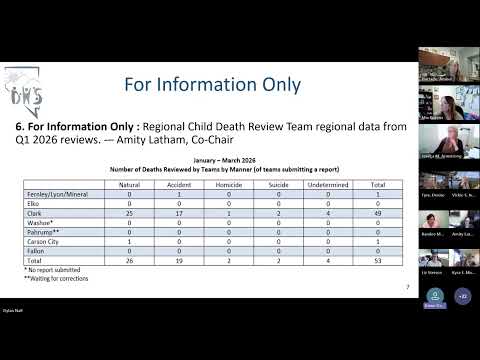
At its May 20 meeting the Executive Committee to Review the Death of Children reviewed its mission, statutory duties, and funding mechanism; Amity Latham noted a $1 fee on certified death certificates funds prevention grants and the committee compiles an annual statewide report.
The Executive Committee to Review the Death of Children opened its May 20 meeting with an overview of the panel's purpose and funding.
"The executive committee reviews the findings and recommendations to determine what action to take in an effort to prevent similar deaths in the future," Amity Latham said, outlining the group's goal of preventing child maltreatment and death through recommendations for law, policy and practice change. Latham told members the committee also oversees multidisciplinary teams, training, and a statewide annual report.
Latham cited state statute and a dedicated funding mechanism. "NRS 4 3009 allotted a fee of $1 per issued certified death certificate as a way to fund prevention efforts," she said, and noted that in state fiscal year 2021 roughly $130,000 was awarded for prevention work focused on safe sleep, suicide prevention and water safety.
The committee's stated duties include adopting statewide protocols for child-death review, appointing multidisciplinary teams, compiling statistics and recommendations for regulatory and policy changes, and overseeing training and development programs for teams that review child deaths. Members were told the committee meets quarterly and that meetings are open to the public.
Next steps flagged during the overview included ongoing grant rounds (a notice of funding opportunity was mentioned) and follow-up reporting and legislative engagement to support the committee's systemic recommendations.