Get Full Government Meeting Transcripts, Videos, & Alerts Forever!
Get email alerts on the Septic Systems topic
No spam. Unsubscribe anytime.
Health department, developers and commission debate septic rules and engineered private sewer
Summary
Officials and residents discussed septic minimums, engineered private sewer systems and who bears long-term maintenance costs; health-department staff said engineered systems can be approved with certification and financial assurances.
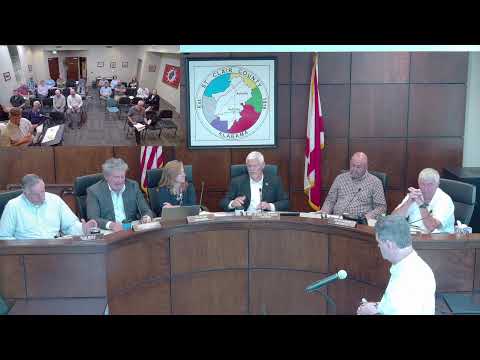
During the work session, county leaders turned to wastewater and subdivision infrastructure, with the chair noting the commission must avoid leaving future residents with failing systems. A health-department representative said minimum lot-size rules interact with perk tests and that engineered private sewer systems are governed by distinct state or utility regulations.
The health-department representative summarized the technical baseline: “15,000 is the minimum,” but noted that with soil science and engineer approval, smaller lots can qualify if an engineered system and replacement plan are documented. Commissioners discussed requiring perk tests or engineered-system certifications before an approval is granted and discussed requiring proof that funding exists to repair or replace private systems if an operator ceases to maintain them.
Private-sector presenters said centralized systems can be viable but must be financially sustainable, and one contractor described projects where an HOA or private operator maintains the system for the subdivision. Commissioners signaled interest in requiring guarantees or cash bonds that would allow remediation if a private operator dissolved.