Get Full Government Meeting Transcripts, Videos, & Alerts Forever!
Get email alerts on the Permit Decision topic
No spam. Unsubscribe anytime.
Residents urge ADEM to deny draft Integra permit for Flint River discharge
Summary
At a public hearing before the Alabama Department of Environmental Management, dozens of residents urged the agency to deny or delay a draft permit for an Integra wastewater plant that would discharge treated effluent to the Flint River, citing dilution, compliance history and risks to recreation and public health.
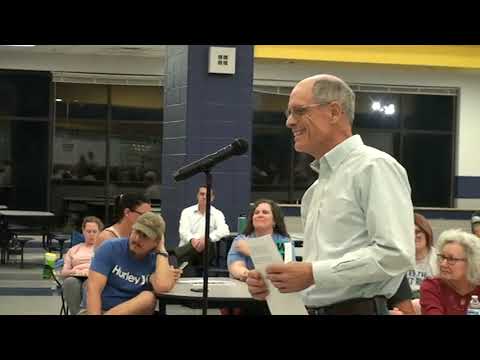
Dozens of residents urged the Alabama Department of Environmental Management on the record to deny or delay a draft permit for a proposed Integra wastewater treatment plant that would discharge treated effluent to the Flint River.
Cameron Gregg, who identified himself as a water‑quality professional, told the hearing the permit relies on flow estimates that overstate dilution and asked ADEM for accurate low‑flow measurements at the site before proceeding. "I'm requesting a more accurate study of how the discharge values reach the river itself at the site," he said. Multiple speakers described the river as in regular use for swimming, kayaking and baptisms and said even treated effluent can harm those uses.
Speakers cited a range of concerns about operator compliance at Integra's existing Meridianville facility, alleging repeated permit exceedances for solvents, nutrients and E. coli and presenting photos and samples they said show sludge and elevated bacteria downstream. "This was thigh high. I was wading through the stuff. It was disgusting," Jeff Williams said of samples he collected near the outfall.
Several residents asked ADEM to require an independent environmental impact review, stricter monitoring and demonstrable compliance at existing facilities before approving a second permit. Speakers also pressed local leaders to consider zoning, buffer and odor/noise limits to protect established neighborhoods. The hearing did not record any formal agency decision; speakers concluded their remarks and the public comment period continued.