Get Full Government Meeting Transcripts, Videos, & Alerts Forever!
Get email alerts on the Land Use Development topic
No spam. Unsubscribe anytime.
Conservation commission backs moving Matthew Paul’s Carlton Hill home proposal forward despite wetland buffer concerns
Summary
The Woodstock Conservation Commission voted to support advancing Matthew Paul’s single-family home application on Carlton Hill Road to the next review step while flagging runoff, septic placement and 100-foot town buffer impacts for further review.
The Woodstock Conservation Commission voted to support moving Matthew Paul’s application for a single-family home on Carlton Hill Road to the next stage of town review after discussing proximity to mapped wetlands and buffer-zone concerns.
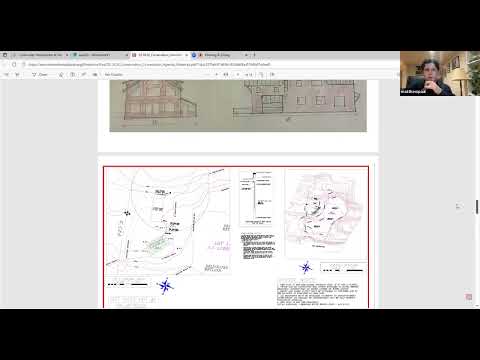
Commission members raised runoff and permeable-surface risks because the proposed driveway and septic field lie near mapped wetland buffers. Chair (speaker S3) listed the “structure and septic” and the driveway running through the wetland as “my big concerns,” and asked whether plantings or engineering solutions could reduce runoff. Matthew Paul, the applicant, said he is “working with a wetland specialist” and that the septic drawing from his engineer places the system adjacent to the 50-foot wetland boundary.
Members clarified that Woodstock enforces a 100-foot town wetland buffer while the state wetland boundary is 50 feet. The applicant said the septic is outside the state’s 50-foot buffer but inside the town’s 100-foot buffer and warned that moving the septic to meet the town buffer could make the site unbuildable. “The septic system is in the … outside of the 50 foot buffer, but is in the 100 foot buffer,” the applicant said.
After discussion about mitigating runoff with plantings, filter socks and minimizing impermeable surface, a committee member (S1) moved to support forwarding the application; Jenny (S6) seconded. Members voted in favor. The chair closed the item by thanking the applicant and saying the commission would forward its recommendation to the next review body.
The commission’s recommendation does not itself permit construction; the application still must move through town development review and any state agency actions required for the septic permit. The vote recorded during the meeting reflects the commission’s advisory recommendation to proceed, not final municipal approval.