Get Full Government Meeting Transcripts, Videos, & Alerts Forever!
Get email alerts on the Surveillance Cameras topic
No spam. Unsubscribe anytime.
Residents push for strict policies as Farmington considers license‑plate camera system
Summary
A resident urged the Farmington Select Board to reconsider a federally funded license‑plate‑reader project, citing privacy and misuse concerns; town officials said the cameras are a Senator’s earmark, data will be town‑owned, and a public steering committee will draft policy before deployment.
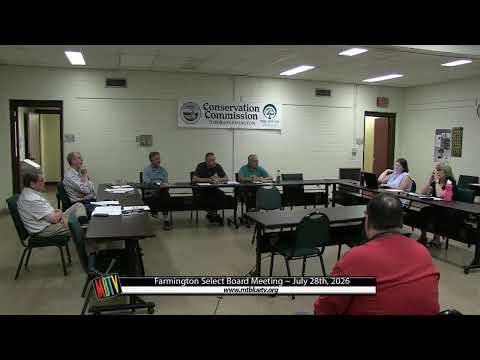
A Farmington resident urged the Select Board to slow down and set strong limits on a planned license‑plate‑reader (LPR/ALPR) camera program, warning the technology risks turning everyday movement into permanent surveillance.
"I don't believe that this project is so much about public safety as it is about ... public surveillance," Wyatt Flagg said, identifying himself as a Farmington and New Sharon resident, and asked who would have access to the data and how it would be stored. Flagg said nationwide examples of misuse — officers tracking ex‑partners and third‑party live streams from public cameras — show the need for strict controls.
Town officials responded that the cameras were obtained through a congressional earmark and that the town purchased a Verkada system rather than the brand widely discussed in public comments. The town manager said the intent is investigatory and public‑works monitoring at high‑crash intersections, not continuous real‑time monitoring. "The data is ours," the manager said, adding the town will control storage, access and retention and "we don't plan on having the features turned on for facial recognition."
Officials said the police chief is forming a public steering committee to develop policy and "guide the policy going forward on how these are used." Board members and residents called for expanded outreach, a public hearing to explain camera locations and functions, and transparency about who will be able to request or receive footage.
The board noted the current cost ($240,000) comes from a federal earmark and does not use local taxpayer dollars now, but members flagged that, when federal money ends, the town will need to decide whether to pay for maintenance or operations in future budgets. The committee and policy discussions will determine whether and how the cameras are activated.