Get Full Government Meeting Transcripts, Videos, & Alerts Forever!
Get email alerts on the Residential Sampling topic
No spam. Unsubscribe anytime.
EGLE reports low-level residential dioxane detections after lower lab threshold; no wells exceed state health criterion
Summary
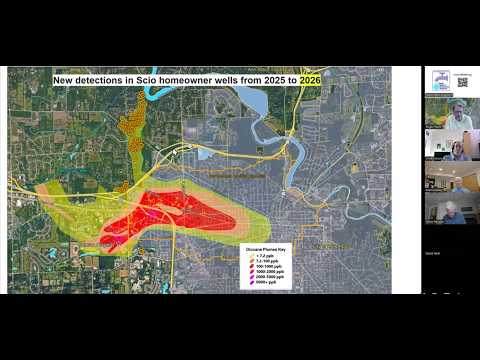
EGLE project manager Chris told CARD that recent residential sampling found new low-level detections (14–16 reported), reflecting a lowered lab detection limit of 0.2 ppb; EGLE said none of the sampled wells exceeded Michigan's 7.2 ppb drinking-water criterion or the 3.0 ppb consent-judgment threshold for replacement water.
Chris (project manager) said the updated Gelman web application and recent sampling identified new low-level detections in residential wells; he reported that Jenny from the health department counted 16 new detections while his collation showed 14 and that EGLE lowered its analytical detection limit in 2025 from 0.5 parts per billion to 0.2 parts per billion, producing additional low-end positives.
Chris told the group that “there is nobody that is being exposed above the state's 7.2 part per billion drinking water criteria” and that none exceeded the 3.0 ppb limit referenced in the consent judgment that would trigger bottled-water provision. He described analytical uncertainty, hydrogeologic variability and monitoring limitations as reasons to avoid overinterpreting year-to-year changes. EGLE and CARD members said they will compare datasets and follow up on residents who reported not receiving mailed results.