Get Full Government Meeting Transcripts, Videos, & Alerts Forever!
Get email alerts on the Surveillance Cameras topic
No spam. Unsubscribe anytime.
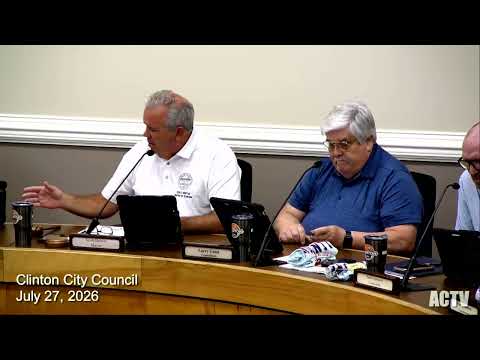
Residents press council on ‘Flock’ license-plate readers; police describe snapshot-only use and 30-day retention
Summary
A resident urged action over privacy and transparency after finding Flock cameras near schools and parks. Police said cameras capture encrypted license-plate snapshots (not continuous video), store data to a cloud (retained ~30 days), and require an investigative reason or NCIC prompt to query.
A Clinton resident, Delaney Davis, told the council she believes the Flock license-plate readers installed around the city are unconstitutional and said she could not obtain all public records she requested. Davis said cameras appear to be pointed toward elementary-school playgrounds and expressed concern about access, oversight and prior personnel with access.
Police Chief Jim Campbell and other officers answered with operational details. Campbell said the city’s cameras capture snapshots of vehicle plates and the rear of the car, not continuous video or audio: "It's a snapshot only. There's no video." He said the camera devices hold about 24 hours of device memory while the cloud archive retains data for about 30 days, and that searches require an investigative reason and are prompted by NCIC or similar hot-list matches. Officers emphasized the system is used reactively to aid investigations (for example, locating vehicles connected to a homicide or a kidnapping) and that data is encrypted between the camera and the cloud. Officials said the city owns the data and shares it with other law-enforcement agencies upon request.
Council members asked whether records shown to the resident were complete; staff said they provide all records that are legally permissible and some records are restricted for criminal-investigation and privacy reasons. The chief confirmed that access controls and case-number justification are required before staff or dispatch may run searches.