Get Full Government Meeting Transcripts, Videos, & Alerts Forever!
Get email alerts on the Surveillance Alpr topic
No spam. Unsubscribe anytime.
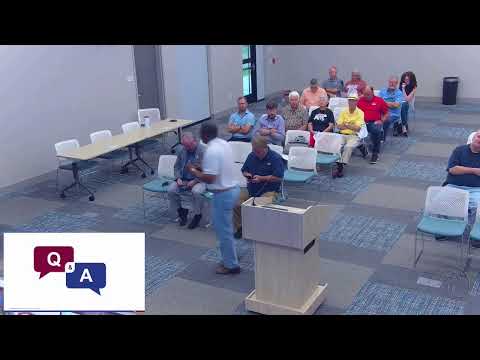
Flock official tells Central council: 'You own the data'; council presses vendor on sharing, retention and audit controls
Summary
Flock representative Ian Leslie told the Central City Council that agencies "own the data," images are deleted after 30 days and audit tools will flag atypical searches. Council members and residents pressed the vendor on data sharing, aggregated training data, liability caps and contract safeguards.
Flock regional public affairs manager Ian Leslie told the City of Central on June 25 that license-plate-reader images captured by Flock cameras are deleted and sanitized after 30 days and that "you guys own the data," a claim he said is spelled out in the company's contract with the city.
Leslie walked the council through how Flock's automated license-plate readers (ALPRs) take point-in-time still images, integrate with NCIC/hot lists for real-time alerts and provide confidence scores and vehicle-signature matching when plates are obscured. "We are not in the business of selling your data," Leslie said, adding that private customers do not get criminal-justice information and that agencies can opt out of using their data for Flock'wide model training.
Council members and members of the public raised repeated concerns about who can access the system, how long analytics and derived data persist, and whether outside agencies receive ongoing access once granted. One resident asked whether model improvements or "intelligence" derived from Central'specific data remain after raw images are deleted; Leslie answered that aggregated identifiers used to improve accuracy may be retained for model training unless the agency exercises a contract opt-out.
Multiple council members pressed Flock on contract language, including a provision councilmembers described as a liability cap limited to roughly 12 months of subscription fees. Leslie said liability and "good faith disclosure" questions were legal matters he would follow up on with the vendor's legal team and the city attorney. Council members also asked about default settings, training, and the vendor's new audit-assist feature that automatically flags atypical activity.
The presentation included a public demonstration of the transparency portal and an explanation that administrators can set permissions and share parameters at the agency level; Leslie said the transparency portal can publish policy, usage rates and prohibited uses and that all searches are recorded in immutable audit logs. He said audit-assist focuses on organizational audits (the agency'level audit record) and flags irregular searches to system administrators.
Council members sought clarity about cross-jurisdiction sharing. Leslie said agencies choose with whom to share; if an agency opts to share statewide, participating agencies may receive alerts when a hot-list plate is detected on their cameras, but those sharing relationships are set by the agency. "You have full control over who has access to your system," he said.
The council did not take an immediate vote on Flock policy at the meeting. Several members asked the city attorney and staff to review contract terms, liability language and opt-out mechanisms and to provide written clarifications and sample wording that would appear in any future contract amendment.
The presentation and Q&A began as a non-action item and included detailed public comment and follow-up requests for written definitions (for example, "aggregated data" vs. "raw data"), documentation of deletion/sanitization procedures and the vendor's response to the previously publicized hardware vulnerability reports.