Get Full Government Meeting Transcripts, Videos, & Alerts Forever!
Get email alerts on the Water Rights topic
No spam. Unsubscribe anytime.
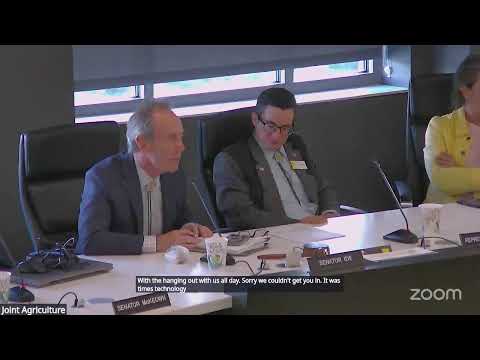
Committee advances water‑rights subdivision bill; draft requires irrig. district review before transfers
Summary
The committee advanced 27 LSO 0066, a draft that requires subdividers to notify irrigation districts at least 60 days before filing water‑rights documents and to follow one of three paths (cooperation, declaratory judgment, or notice) when districts don’t respond. The sponsorship motion passed unanimously.
The committee moved forward a bill draft requiring owners or subdividers to notify irrigation districts at least 60 days before submitting documents concerning the disposition of water rights to the state engineer or state board of control. LSO staff presented the most recent working draft (0.7) and said it repeats the procedure across several subdivision statutes and applies to subdivisions initiated on or after July 1, 2027.
LSO counsel summarized the three paths in the draft: when an irrigation district provides recommendations within 60 days, the owner must cooperate to address disposition and provide evidence of consent to the governing body; if the owner cannot obtain consent after a good‑faith effort they must seek a declaratory judgment from district court; and if the irrigation district fails to respond within 60 days the owner must notify the governing body. The draft also makes exemptions from subdivision provisions subject to these water‑rights disposition procedures.
Staff from the State Engineer’s Office said the latest version addressed previously raised concerns. Wyoming State Engineer Brandon Gebhardt told the committee he was “not here in support or against the bill” but that the current version “did address the concerns we raised, adequately.” Committee members queried whether the 60‑day timeline should be extended for small districts and whether irrigation‑district recommendations should be required to be made in “good faith” to avoid blocking development for political reasons. Gebhardt and others acknowledged those tradeoffs and noted litigation under the declaratory‑judgment path could substantially delay projects.
The chair called for committee sponsorship; a roll‑call vote was held and the measure passed for sponsorship (the chair reported the sponsorship passed unanimously). The LSO will finalize the bill draft for the sponsoring members ahead of formal introduction.