Get Full Government Meeting Transcripts, Videos, & Alerts Forever!
Get email alerts on the Indigenous Rights topic
No spam. Unsubscribe anytime.
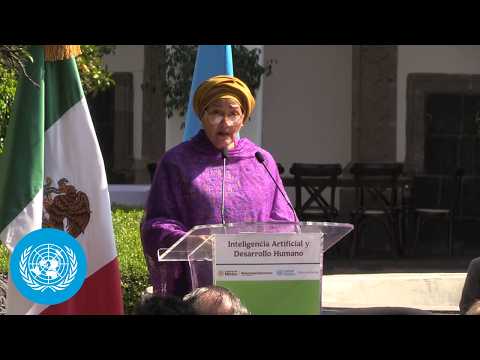
Speaker urges human-centered AI that protects indigenous knowledge and regional values
Summary
The presenter said AI must reflect Latin America and Caribbean traditions and warned that systems trained primarily on written material risk erasing oral-tradition knowledge; highlighted that the region includes over 800 Indigenous peoples representing about 60 million people.
The presenter framed the convening around people, not just technology, saying "The human brain remains the most extraordinary engine of intelligence that we know" and argued that technology must allow people to "see themselves in the technology." The speech warned that when AI systems are trained largely on written material gathered elsewhere, Indigenous oral traditions and knowledge risks being distorted or made invisible.
To illustrate the scale of representation concerns, the presenter said "More than 800 indigenous peoples live here representing 60,000,000 people," and described a regional example: "Chile's National Center for Artificial Intelligence and 30 partner institutions are developing a Laptam GDP, GPT, an open source model trained on regional data," with a first version in Spanish and Portuguese and plans to develop tools for other languages with community consent. The presenter tied these technical details to a values argument: progress should be measured by collective well-being often translated as 'buen vivir.'