Get Full Government Meeting Transcripts, Videos, & Alerts Forever!
Get email alerts on the Research Funding topic
No spam. Unsubscribe anytime.
UMass Chan vice chancellor says 'forward funding' is starving new NIH grants
Summary
A UMass Chan Medical School official told a Westborough Democratic Town Committee forum that changes in federal grant practice—especially 'forward funding'—and additional review layers have reduced awards to new investigators and delayed payments, leaving millions in approved awards unpaid.
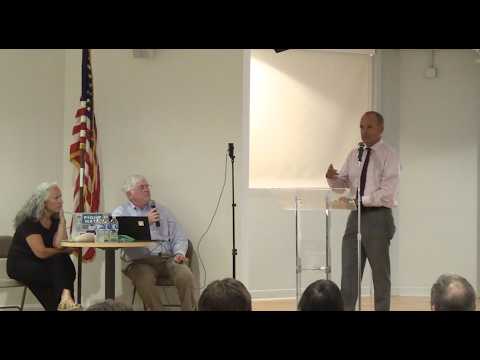
A senior official from UMass Chan Medical School told a Westborough Democratic Town Committee audience that policy and administrative changes at the federal level are severely slowing research funding and reducing opportunities for new investigators. “It’s death by 1,000 cuts,” the vice chancellor for government relations said, describing canceled awards, added review layers and a new practice he called forward funding that encumbers multi‑year awards while releasing only the first year’s cash.
The presenter said UMass Chan’s research portfolio included about $300,000,000 in total research funding, of which roughly $200,000,000 comes from the National Institutes of Health. He said Massachusetts receives about $3,400,000,000 in NIH funding overall, supporting some 28,000 jobs and roughly $7,400,000,000 in economic activity. The official described forward funding as a change that reduces the number of new awards available and creates a pipeline of scored-but-unfunded proposals and delayed payments; he cited about $35,000,000 of awards for the current year and roughly $170,000,000 over five years that are approved but unpaid for his institution.
The presenter also said courts and Congress have reversed some early actions (such as abrupt cancellations and attempts to cap indirect cost rates) but raised new concerns about administrative tactics that slow or withhold funding. He urged organizers and attendees to continue advocacy at both state and federal levels and to use personal stories to persuade lawmakers.