Get Full Government Meeting Transcripts, Videos, & Alerts Forever!
Get email alerts on the Pud Amendments topic
No spam. Unsubscribe anytime.
Planning board recommends PUD zoning amendments, including higher height and revised density rules
Summary
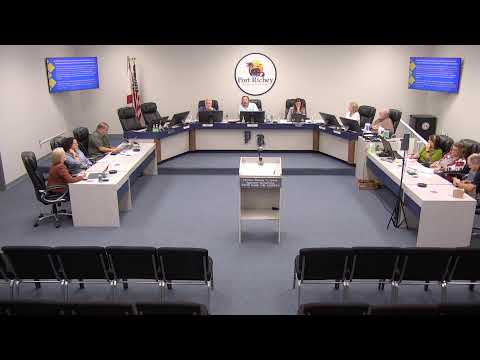
The Port Richey Planning & Zoning Board voted July 28 to recommend approval of ordinance 26.746, a city‑initiated amendment to Section 127‑58 that aligns PUD standards with the comprehensive plan, clarifies upland open‑space calculations, and allows a maximum PUD building height of up to 85 feet subject to review.
The Port Richey Planning & Zoning Board on July 28 voted to recommend approval of ordinance 26.746, a city‑initiated zoning text amendment to Section 127‑58 governing Planned Unit Development (PUD) districts. Planner Tammy Vrana told the board the amendment is intended to bring the PUD regulations into alignment with recent changes to the comprehensive plan and to clarify application, approval and modification procedures.
"The request is a city initiated zoning text amendment," Vrana said, describing the proposal as a rewrite to implement the comprehensive plan's density and intensity standards and to improve code organization and administration. Vrana said the existing PUD standard sets a maximum of 18 dwelling units per acre in most locations, while the recently adopted Cody River Landing future land‑use category allows up to 40 units per acre; the amendment directs PUD density to follow the property's future‑land‑use designation. She also said open‑space and building‑coverage calculations would be based on upland portions of waterfront sites, excluding submerged lands, and that boardwalks and similar publicly accessible waterfront improvements could count as qualifying open space.
The proposed text also addresses maximum building height in PUDs. Vrana said the amendment would allow a maximum PUD height of 85 feet (up from 72 feet currently) to accommodate vertical mixed‑use buildings and flood‑resilient construction, but she emphasized that the 85‑foot figure would be a maximum and not an automatic, by‑right entitlement: "A lot of things need to be taken into consideration," Vrana said, citing site characteristics, context and flood‑plain freeboard requirements.
After questions from members about how height would be measured relative to base flood elevation and how the 40‑units‑per‑acre limit would apply only in the Cody River Landing future land‑use category, a board member moved to recommend approval. The motion passed by voice vote. Vrana said the ordinance will proceed to city council for first reading on August 11 and second reading on August 25.
Next steps: the Planning & Zoning Board's recommendation will be transmitted to city council for hearings on August 11 (first reading) and August 25 (second reading).