Get Full Government Meeting Transcripts, Videos, & Alerts Forever!
Get email alerts on the Zoning Text Amendment topic
No spam. Unsubscribe anytime.
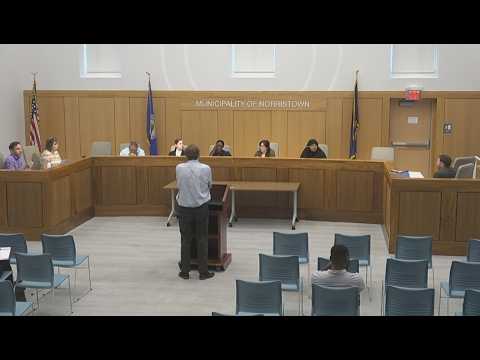
Planning Commission backs text change to allow row homes in MR district
Summary
The Norristown Planning Commission voted to recommend a text amendment (26‑0‑3) allowing row homes and narrower single‑family attached units in the MR (multifamily residential) district, adopting standards for lot size, separations, height and parking; the change does not approve any specific project.
The Norristown Planning Commission voted to recommend approval of a text amendment (26 0 3) to the MR multifamily residential district that would explicitly allow row houses and set standards for their development. Chair (voice 2) called for the motion and the roll call passed with the ayes recorded and the commission recommending the amendment move to council.
Planning staff (voice 4) told the commission the amendment adds clear dimensional standards — a minimum tract size of 3 acres for certain row‑home configurations, 15 feet minimum side‑by‑side separation, 40 feet front‑to‑rear separation, a maximum height of 35 feet (three stories), and a parking rate of 1.5 spaces per unit — while stressing the amendment itself does not approve any specific development. "This amendment has clear standards for row home development," staff said, adding any future project would still require full land‑development review.
Commission discussion focused on how the change fills a gap in the zoning code and streamlines future reviews. Patrick Hitchins, solicitor (speaker 7), reminded the commission to concentrate on the text amendment and not on unadvertised site plans: the amendment would permit narrower single‑family attached units (row houses) that are less than 20 feet wide, a distinction Hitchins read from the code. He cautioned that permitting a use without workable standards risks de facto exclusion or legal challenge, and that enforcement tools (transfer inspections, zoning notices, appeals) remain available if conversions or illegal uses occur.
The commission then took a roll‑call vote. The chair announced the ayes had it and the body recommended the amendment be forwarded to municipal council for the next steps in the public‑hearing process. The amendment sets rules for future projects but does not alter the requirement that individual developments return for land‑development review and any necessary permits.