Get Full Government Meeting Transcripts, Videos, & Alerts Forever!
Get email alerts on the Permit Opposition topic
No spam. Unsubscribe anytime.
Residents urge ADEM to deny Integra permit for proposed Flint River discharge
Summary
Dozens of residents, business owners and conservation groups told the Alabama Department of Environmental Management at a public hearing that a proposed Integra sewage‑treatment plant upstream on the Flint River would harm recreation, wildlife and local livelihoods and asked the agency to deny the permit or impose far stricter conditions.
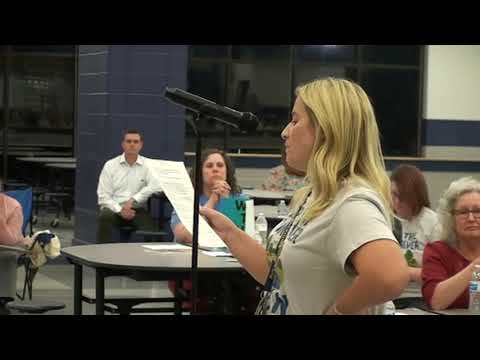
Dozens of residents and business owners told the Alabama Department of Environmental Management at a public hearing that a proposed Integra sewage‑treatment plant that speakers said would discharge roughly 1,000,000–1,200,000 gallons per day should be denied or require much stronger safeguards.
"This is an abnormal risk to the living river that's central to our community, identity, and economy," said Jason Paulson, owner of TGL Adventures, who told the agency the plant would threaten school trips and outdoor tourism. Multiple speakers said the river is used for full‑body recreation — swimming, kayaking and family outings — and asked whether ADEM's classification and standards reflect current use.
Speakers repeatedly asked for full public disclosure of design plans and low‑flow/drought modeling, independent third‑party audits, monthly downstream recreational testing for E. coli and enterococcus, monitoring for pharmaceutical compounds, an enforced community complaint mechanism, and automatic penalties or shutdowns for repeated violations. "Beta must require full disclosure of design plans, low flow modeling data, and treatment guarantees made public," one resident said.
Conservation advocates and citizen scientists urged training and local testing through Alabama Water Watch to produce EPA‑protocol data; Susan Weber of the Flint River Conservation Association warned the watershed includes federally listed species and said citizen monitoring could help detect problems early. Several speakers also raised flood and property‑value concerns and urged the agency to consider alternative sites.
The hearing included procedural reminders that written comments are due by 5:00 p.m. the following day. No formal vote was taken at the hearing; it was a public comment forum for the agency to collect community input prior to any permitting decision.