Get Full Government Meeting Transcripts, Videos, & Alerts Forever!
Get email alerts on the Education Funding topic
No spam. Unsubscribe anytime.
MMSD board endorses Fund Wisconsin Public Schools lawsuit, urges state funding review
Summary
The Madison Metropolitan School District Board voted to support the Fund Wisconsin Public Schools lawsuit and called for a review of Wisconsin's school funding system, citing gaps in special-education reimbursement and unequal resources across districts.
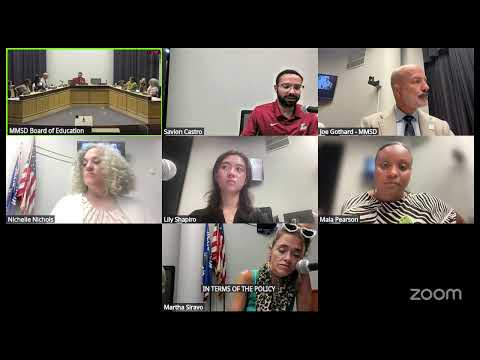
The Madison Metropolitan School District Board of Education voted to adopt a resolution formally expressing support for the Fund Wisconsin Public Schools lawsuit challenging Wisconsin’s school funding system. Board member Mosner Balcom read the resolution, citing Article X, Section 3 of the Wisconsin Constitution and the Wisconsin Supreme Court precedent Vincent v. Voigt in support of ensuring students have an equal opportunity to a sound basic education.
"This is a resolution in support of Fund Wisconsin Public Schools litigation," Board member Mosner Balcom said while presenting the document and urging a review of general aids and special-education reimbursement. President Castro moved to adopt the resolution; an advisory vote was recorded (board member Shapiro: "Aye") and the president announced the motion carries. The resolution authorizes the superintendent or a designee to permit use of the district's name and logo consistent with district policy and directs the board clerk to transmit a copy to the governor, the state legislature, the joint finance committee, and the Wisconsin Association of School Boards.
The resolution text included findings that special-education and other mandated services continue to cost districts more than state reimbursement covers, that state general aid has not kept pace with inflation for more than 16 years, and that districts have become increasingly reliant on local property taxes and referenda. The board’s action is a formal expression of policy support; no further local funding obligations were established by the resolution. The board directed staff to share the adopted resolution with state officials as outlined in the document.