Get Full Government Meeting Transcripts, Videos, & Alerts Forever!
Get email alerts on the Employee Health Insurance topic
No spam. Unsubscribe anytime.
Curative promises fixes after Volusia school employees report denied care and unpaid claims
Summary
Curative executives told the Volusia County School Board they are reprocessing errors, adding providers and introducing a faster prior-authorization turnaround after employees and families described unpaid claims, canceled procedures and disrupted ABA therapy.
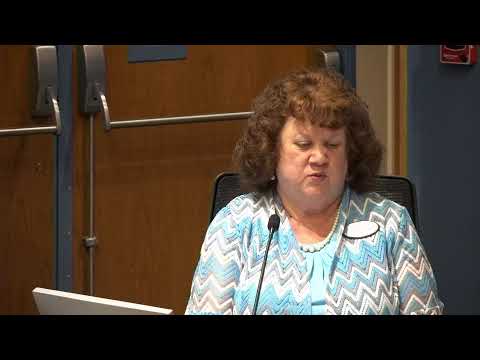
Chris Gravatt, vice president of Curative, told the Volusia County School Board on July 28 that his company is “taking ownership” of recent billing and access problems reported by district employees and families and is putting immediate fixes in place.
Gravatt said Curative has reprocessed claims that caused payment errors, is instituting “a 3 day turnaround time for prior authorizations,” and will assign dedicated clinical care navigators for members with complex needs. He also said Curative had added provider partners including AdventHealth and worked to streamline arrangements with Baptist MD Anderson and Moffitt to shore up specialty access.
Board members and dozens of employees and family members described a different experience in public testimony: providers refusing Curative patients, surgeries canceled for lack of authorization, and large out-of-pocket bills. At the meeting, several speakers told trustees they had lost continuity of care or that ABA therapy for children with autism had been interrupted. As one parent, Tanya Pohl, told the board: “ABA therapy is not optional for my son. It is medically necessary.”
Gravatt acknowledged the harm and said Curative is pursuing several operational changes. He said Curative has “proactively reprocessed claims” that caused errors and that where prior authorizations are delayed the company will elevate the case for faster review. He also described using an interim cash-card payment option to reassure providers while accounts are reconciled.
Trustees pressed Curative to provide concrete metrics: how many claims remain unpaid, the dollar value of outstanding claims, denial and reversal rates, provider turnover, and the number of members affected. Deidre Wittenberger, the district CFO, asked for transparency on claims still outstanding and the board requested follow-up on the roughly 37 cases the superintendent flagged as examples.
Multiple employees urged the board to prepare an alternative if Curative cannot demonstrate rapid improvement. Curative representatives in the room — identified by district staff as Leah Redmond (on-site) and Kimberly Atkins (care navigation) — were asked to provide escalation contacts and data. Gravatt said members should expect a 24-hour acknowledgement to navigator texts or emails and a 48-hour turnaround for callbacks when escalation is required.
Next steps: the board asked staff to collect and report data on unpaid claims, denials, provider exits and member impact and to continue monitoring Curative’s progress. Several trustees signaled they would consider additional action if issues are not resolved quickly.