Get Full Government Meeting Transcripts, Videos, & Alerts Forever!
Get email alerts on the School Funding Referendum topic
No spam. Unsubscribe anytime.
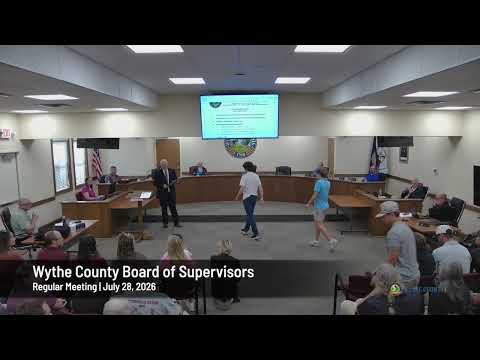
Wythe County outlines 1% sales tax plan to fund $70M+ school construction; voters to decide in November
Summary
County staff presented a plan for a local 1% option sales tax to fund new construction and renovations estimated at more than $70 million; the board authorized filing paperwork for a referendum to appear on the Nov. 3 ballot and said funds would be restricted to capital projects (tax to expire no later than 06/30/2046).
County staff told supervisors that a local 1% option sales tax referendum would allow Wythe County to fund planned school projects, including a new Spiller Elementary School and renovations at Fort Chishol High School. The package of projects was presented with a combined estimated cost "over $70,000,000." The board voted previously to proceed with preparing the paperwork and county staff said the legal steps to file with the court are underway; the ballot question would be presented to voters on Nov. 3, and any tax would be restricted to school capital projects and debt service and must end no later than June 30, 2046.
Mr. Barr (county staff) described the funding mechanics, noting that grocery food and personal hygiene items would not be subject to the sales tax and that state receipts would pass through to the county's restricted school capital fund. Staff estimated that Wythe County could receive between roughly $3.2 million and $3.9 million annually from the 1% rate depending on peer-county comparisons and local retail activity. "These projects are estimated at, for project total estimate for those projects is over 70,000,000," Mr. Barr said during the presentation. The board clarified that passage would require voter approval and that the prior resolution did not itself raise taxes but only authorized pursuing the referendum process.
Supervisors and staff agreed to continue public outreach to explain the ballot measure, how funds would be used, and the difference between capital funding and ongoing school operating expenses.