Get Full Government Meeting Transcripts, Videos, & Alerts Forever!
Get email alerts on the Land Use topic
No spam. Unsubscribe anytime.
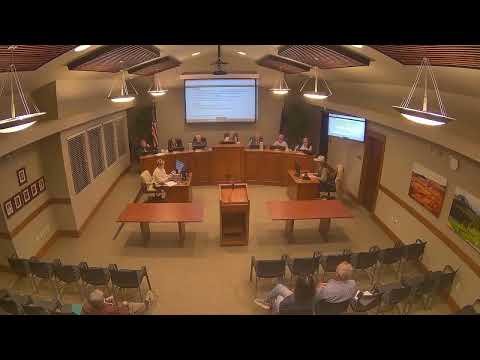
Council rejects spot rezoning request for parcel ADash0482Dash0000Dash0000
Summary
After public comment and Planning Commission input, the Parowan City Council voted to keep zoning unchanged for parcel ADash0482Dash0000Dash0000, rejecting a requested spot change from A‑1 (agricultural) to R‑1A over neighborhood objections.
Parowan City Council on April 16 voted to maintain existing agricultural (A‑1) zoning for parcel ADash0482Dash0000Dash0000, rejecting a proposed spot change to R‑1A. The motion to leave the zoning unchanged was made and approved after residents raised concerns that the change would increase density and create a precedent for future splits of narrow lots.
During public comment, Larry Zajac said the rezoning would "open the door" to splitting lots and allow more residences than the agricultural designation permits. "When you get to the R‑1A zone, it has a higher density because you can split a lot off," Zajac said, arguing the shift would alter neighborhood character. Spike Russ presented a petition signed by nearby Parowan residents urging the council to follow the Planning Commission recommendation to deny the request. The council voted on the motion to keep the zoning the same; the motion carried and the request was denied.
The action was characterized as a local land‑use decision that follows standard procedures: the application went to the Planning Commission, received public comment and a council work-session review before tonight's vote. No ordinance or amendment was adopted; the zoning remains A‑1 for the parcel in question. The council thanked residents for participating in public comment and noted land‑use precedents will guide future requests.