Get Full Government Meeting Transcripts, Videos, & Alerts Forever!
Get email alerts on the Public Comment topic
No spam. Unsubscribe anytime.
More than 70 testify: Seattle public comment shows split on SEPA appeals and housing
Summary
Dozens of residents and advocates — for and against CB121215 — used the council’s public comment period to press opposite views on whether administrative SEPA appeals delay housing or protect communities; speakers included neighborhood leaders, environmentalists, developers and union representatives.
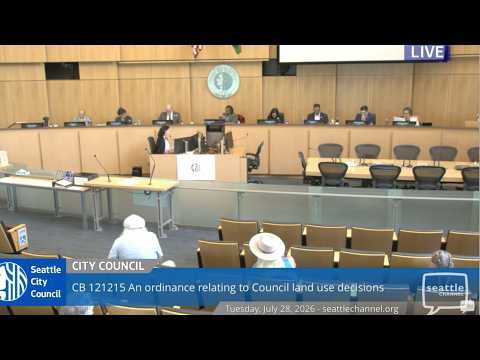
More than an hour of public comment at the July 28 Seattle City Council meeting focused on Council Bill 121215, the proposed change to local SEPA administrative appeals. The hybrid session included roughly 71 in‑person speakers and many remote callers; the council limited each speaker to one minute.
Supporters of the bill — including housing and climate advocates, renters’ groups, labor representatives and developers — argued that duplicative appeals are used to delay transit‑oriented housing. "The only way we can hear their voices is if we build the requisite housing for them to become residents," said Brandon (public commenter). Tiffany McCoy, interim CEO at the Seattle Social Housing Developer, said her organization has site control for parcels that could deliver family‑size units and warned that the current process can stifle voter‑mandated social housing.
Opponents told a different story: neighborhood activists, scientists and tree and park advocates said administrative appeals are often the only affordable check on weak environmental review and historical displacement. "This bill takes away our right to question the city's environmental review through an administrative appeal," said Lois Martin (Beacon Hill/advocate). Multiple speakers asked the council to adopt Amendment B (Saka) — a reform alternative that would streamline appeals while preserving the hearing examiner avenue.
Speakers also invoked local equity and climate trade‑offs: proponents framed dense housing near transit as climate action; opponents said inadequate review would disproportionately harm communities of color. Council staff later incorporated several transparency amendments (summary pages and extended comment window) that council members said were responsive to public concerns.