Get Full Government Meeting Transcripts, Videos, & Alerts Forever!
Get email alerts on the Statutory Process topic
No spam. Unsubscribe anytime.
DNR explains how conservancy districts are formed, governed and dissolved
Summary
DNR staff outlined formation under Indiana Code 14-33, the petition and court process, board elections, required work plans, and three statutory routes for dissolution. Officials stressed that dissolutions and boundary changes must run through the circuit court.
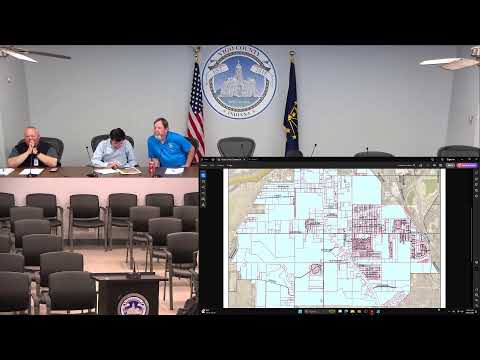
Christy Johnson of the Indiana Department of Natural Resources gave a step-by-step explanation of how conservancy districts are created and reviewed under state law, citing Indiana Code 14-33.
"Districts are considered a special, local government group... their statute is Indiana code 14 dash 33," Johnson said, summarizing petition thresholds (roughly 30% of signatures and at least 51% of total land value signatures), parcel-based boundaries and the role of the circuit court in approving a district. She said DNR performs a technical review focused on economic feasibility, boundary logic and whether a credible plan exists to address the district's stated purposes.
Johnson described the typical lifecycle: an initial court order establishes the district and the judge often directs county commissioners to appoint the first board for about a one-year term, after which freeholders within the district elect directors. Districts must develop a work plan approved by DNR and the court, and the district may only expand boundaries or add purposes through court process.
On dissolution, DNR identified three statutory routes: board-initiated petition, freeholder petition, or assumption of duties by a larger district that will take on the obligations, assets and services; all routes require court approval so services such as drinking water or sewage are not abandoned.
DNR staff emphasized there is limited state enforcement when boards become inactive; the agency relies on freeholders or legal petition to resolve inactive or ‘‘limbo’’ districts.