Get Full Government Meeting Transcripts, Videos, & Alerts Forever!
Get email alerts on the Education Technology topic
No spam. Unsubscribe anytime.
Pasco work group proposes ‘Learning First, Limited Screens’ guidance to limit passive screen time
Summary
A district work group presented “Learning First, Limited Screens, Maximum Learning,” a teacher‑support guide that urges prioritizing direct instruction and limiting passive screen use while keeping intentional digital learning and accommodations in place.
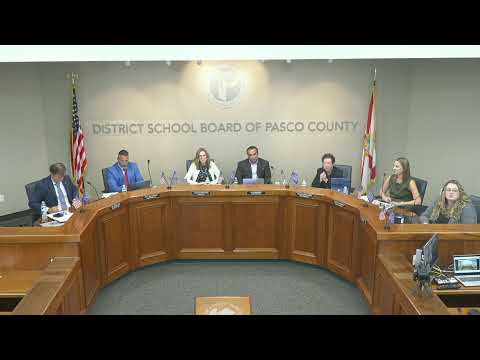
A district work group presented new classroom technology guidance to the Pasco County School Board, emphasizing that foundational skills should come first and that technology must be used intentionally to amplify learning rather than replace teacher instruction. "Learning First, Limited Screens, Maximum Learning" is framed as a practical guide for teachers, not a compliance document, staff said.
Dr. Legg, who introduced the effort, said the work group was formed after earlier discussions and recent research showing excessive screen time can harm learning. "I am fundamentally against passive use of technology," he said, urging the board to emphasize teacher‑led instruction. Work group presenter Miss Green told the board the recommendations prioritize direct instruction, maintain teacher ownership, reinforce handwriting and reading, and limit passive screen activities while allowing intentional use for research, collaboration and assessment preparation. "A student who struggles with reading comprehension will find little value in AI generated content regardless of how sophisticated the algorithm," she quoted to underscore the point about instruction-first practice.
The document covers K–12 developmental differences and includes examples, non‑examples, and supports for students with disabilities and English‑language learners. Board members praised the guidance as a starting point for new teachers and a way to set expectations for families. The district plans to treat the guidelines as averages to inform planning conversations (PLC meetings) rather than as minute‑by‑minute mandates.
The board did not take formal action on the guidance at the workshop; staff said next steps include distributing the document to schools and working with principals and teacher teams on classroom implementation.