Get Full Government Meeting Transcripts, Videos, & Alerts Forever!
Get email alerts on the Combined Sewer Overflows topic
No spam. Unsubscribe anytime.
Springfield councilors hear presentation on combined sewer overflows and water quality
Summary
At a July joint committee meeting, Springfield Water and Sewer staff explained how combined sewer overflows (CSOs) operate, showed public monitoring tools, and discussed monitoring data, infrastructure investments and the new treatment-plant timeline.
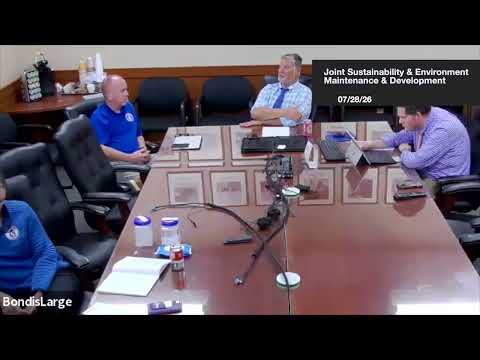
Councilor Victor Davila called a joint meeting of the Sustainability & Environment and Maintenance & Development committees to order at 4:07 p.m. and opened a discussion about Springfield’s combined sewer overflow (CSO) system, regulatory obligations and water-quality concerns. He invited staff from Springfield Water and Sewer to present background and answer questions.
Josh Schimmel, of Springfield Water and Sewer, played a five‑minute background video explaining CSO history and federal rules, then told the council that CSO discharges occur passively when sewer system capacity is exceeded. "We're not sitting there pulling the lever or pushing a button that says dump," Schimmel said, explaining that overflows relieve pressure so sewage does not back up into basements or streets.
The presentation included how the utility monitors CSOs in real time and posts data to a public website. Schimmel said the city has invested in large projects to reduce overflows and is continuing a multi‑year capital program while balancing other drinking‑water and wastewater obligations. Councilors pressed staff on recent discharge volumes, water-safety advisories and timelines for a new treatment plant.