Get Full Government Meeting Transcripts, Videos, & Alerts Forever!
Get email alerts on the Mental Health Services topic
No spam. Unsubscribe anytime.
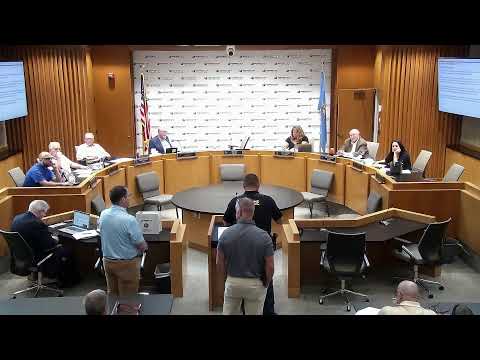
Midwest City discusses $120,000 contract to keep mental‑health clinicians embedded with police
Summary
Midwest City leaders debated approving a $120,000 professional services agreement with Anchored Hope Family Services to continue embedded licensed mental‑health services for police response; staff said the DOJ grant runs through 09/30/2027 and some costs will be borne by HR/benefits. The roll‑call vote was requested but not recorded in the transcript.
The Midwest City Council considered a professional services agreement to contract Anchored Hope Family Services for licensed mental‑health services in support of the police department. The Chair read that C9 would approve a $120,000 contract (Professional Services Agreement #2627) and invited staff and program partners to brief the council.
A committee member praised the police department’s embedded mental‑health program, noting the department’s CIT training and saying the effort has produced measurable outcomes: “we saved 1 life,” the committee member said while urging the council to sustain the program. An agency official told the council the DOJ funding stream remains active “through 09/30/2027” and that the contract will be with the police department and the city; the official added that some of the $120,000 will be funded from the city’s HR/health benefits accounts rather than charged entirely to the police budget.
Council members pressed staff for operational detail. Asked whether the program reduced repeat 911 callers, the agency official said there is a reduction in repeat callers and provided a workload figure: of about 1,200 mental‑health calls for service annually, the embedded response team responded to roughly 662. Council members also asked about partnerships and long‑term measurement; staff said the program relies on diversion‑court partners and that some outcome metrics can be obtained from those partner systems.
A committee member moved to approve C9 and the motion was seconded; the Chair solicited a voice vote but a member voiced a ‘nay’ and a roll‑call was requested. The transcript ends while the Chair said a roll‑call vote was needed, so the formal recorded outcome for C9 does not appear in this transcript.