Get Full Government Meeting Transcripts, Videos, & Alerts Forever!
Get email alerts on the Data Centers topic
No spam. Unsubscribe anytime.
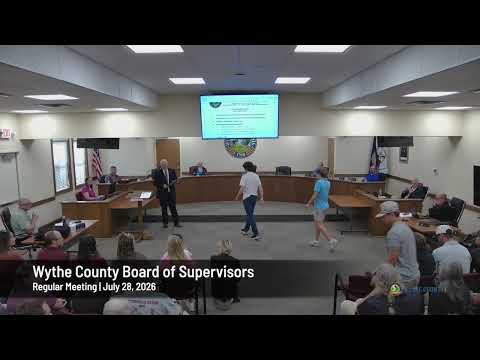
Wythe County residents press board for zoning and transparency as data centers draw concern
Summary
Dozens of residents at the July 28 Wythe County supervisors meeting urged the board to adopt countywide zoning and demand transparency from companies proposing data centers, citing water, noise and farmland loss.
Dozens of residents used the board’s allotted citizen‑comment time on July 28 to press supervisors for countywide zoning and more transparency around prospective data‑center projects.
Brandy Klein opened the public comment period with a poem and a direct appeal: “We don’t consent to this effort to squander our land and water,” she told the board, arguing that the county is changing in ways that threaten local farms and rural character. Miranda Edwards asked the board to provide detailed facts about FluidStac (the company mentioned in prior presentations), including where its operations already exist, how many local jobs will be created and who the end users will be. “We want answers, transparency, and facts,” Edwards said.
Multiple speakers later described the same concerns in technical and personal terms. Susan Branscomb told the board that a land‑use ordinance is “one of the most important tools a community has” to keep incompatible industrial projects away from homes and farmland; she cited an estimate in the meeting that Wythe County lost about 15,675 acres of farmland in five years. Bob Walton, a recently retired technology professional, urged the board to rely on independent expertise rather than corporate presentations and requested a countywide ban on nondisclosure agreements for public officials handling development deals.
Speakers emphasized specific impact risks: water use, grid demand and noise. Catherine Clemons noted a claim made by a data‑center presenter that a closed‑loop facility would use 2,800 gallons of water per day and warned that future projects might not use the same approaches. Several speakers urged supervisors to force special‑use permitting, public hearings, or to limit high‑voltage and large industrial uses to designated industrial parks (such as Progress Park).
The board heard a mix of strong opposition to out‑of‑park data centers, calls for higher taxes on data‑center property, and requests for in‑person visits to existing facilities so supervisors and staff can better understand noise, visual and operational impacts. Chair James D. Smith and other supervisors repeatedly told speakers they would try to provide more information—posting Q&A material and sharing staff analyses online—and encouraged residents to attend upcoming town‑hall outreach on the draft zoning ordinance.