Get Full Government Meeting Transcripts, Videos, & Alerts Forever!
Get email alerts on the Residential Safety topic
No spam. Unsubscribe anytime.
Commission forwards ban on residential fuel tanks over 150 gallons to city council after public questions
Summary
After a public hearing in which a resident raised concerns about a 150-gallon threshold, the commission unanimously recommended a code amendment to prohibit fuel tanks exceeding 150 gallons in residential zones and clarified agricultural exemptions and nonconforming uses.
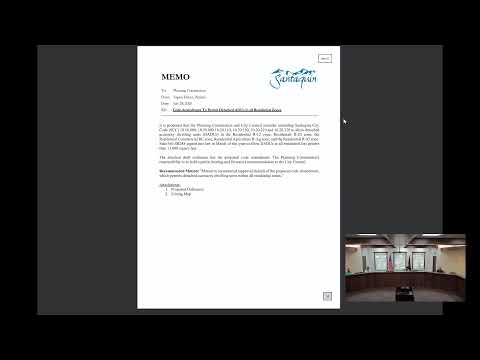
The Santaquin City Planning Commission unanimously voted to forward a proposed code amendment that would prohibit fuel tanks larger than 150 gallons in residential zones to the city council with a positive recommendation.
During the public hearing resident Jacob Frazier asked why the city chose a 150-gallon threshold and cautioned that many older farms and households use larger tanks for legitimate purposes. “I do question why a 150 gallons,” Frazier said, adding that agricultural and older properties often use 500-gallon tanks for farm operations.
Staff explained the number reflects input from the fire marshal and public works director. Planning staff said they initially considered a 100-gallon threshold and, after consultation, were advised to “bump it up to a 150” to accommodate typical residential needs such as fueling dirt bikes, four-wheelers and equipment, while moving larger fueling operations into commercial or industrial zones. Staff also clarified that agricultural zones and residential-ag parcels were not targeted by the change and that lawful nonconforming uses would be reviewed on a case-by-case basis.
Commissioners discussed whether the change should be implemented as a flat prohibition or handled via conditional-use permits for existing properties; staff warned that conditional uses are effectively long-term permissions in Utah and can be difficult to deny once granted. Commissioner Christopher moved to forward a positive recommendation to the city council; Commissioner Johnson seconded. The motion carried unanimously.
Next steps: The proposed amendment will be presented to the city council for final action. Staff offered to meet with residents who believe they would be affected before council consideration.