Get Full Government Meeting Transcripts, Videos, & Alerts Forever!
Get email alerts on the Housing Policy topic
No spam. Unsubscribe anytime.
Council directs staff on rent‑stabilization draft after 600+ public comments; key questions remain on exemptions and registry
Summary
Following more than 600 public comments, the council instructed staff to prioritize finalizing a Rent Stabilization Ordinance, return with a fee study, and work with the Housing Authority on treatment of Section 8 and deed‑restricted affordable units; council also gave detailed direction on governance, registration and capital improvement procedures.
City staff presented a detailed summary of public comments and an annex‑matrix of unresolved policy questions on a proposed Residential Rent Stabilization (RSL) ordinance and related Just Cause amendments, and asked the council for guidance on several open items.
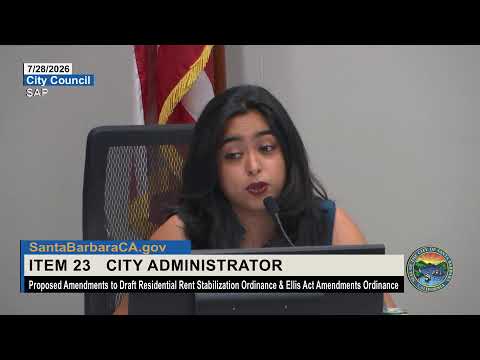
Assistant to the City Manager Bárbara Anderson said the city received 655 written public comments during the public review period and summarized recurring themes: tenant advocates requesting broader protections and no additional exemptions; landlord groups asking for narrower coverage, clearer administrative procedures and protections for small owners; and requests for technical clarifications about capital improvement petitions and fee structure. Anderson outlined staff recommendations to approve the stabilization ordinance first and then adopt just‑cause amendments to ensure consistency.
Public comment filled several hours. Tenant advocates, union representatives and many residents urged "no exemptions beyond state law," a comprehensive rental registry and a strong tenant protection board. A union leader said, "Please adopt a strong, enforceable stabilization ordinance so that our essential workers can continue living here," reflecting common testimony from workers and student advocates. Landlord representatives, including the president of the Association of Rental Property Owners, argued the proposed cap (60% of CPI with a maximum of 3%) is constitutionally problematic and raised privacy and cost concerns about an all‑unit public registry.
Councilmembers then reviewed the staff matrix item by item and gave direction: they generally favored limiting exemptions beyond state law but requested staff return with focused analyses on two narrow possible exceptions — deed‑restricted affordable units and housing owned or operated by a public housing authority or other public entity — and asked staff to consult the Housing Authority on Section 8 voucher implications. Council also asked staff to proceed with an independent fee study (estimated $35,000–$50,000) to establish a registration fee and to draft the ordinance language reflecting the council’s guidance for subsequent formal introduction and adoption.
Councilmembers emphasized implementation sequencing: prioritize finalizing the RSL ordinance language, return with the fee study and then present the just‑cause amendments to keep both measures coherent. Staff will return with draft ordinance language and the requested analyses for council consideration before formal introduction.