Get Full Government Meeting Transcripts, Videos, & Alerts Forever!
Get email alerts on the Marcus Alert topic
No spam. Unsubscribe anytime.
Arlington staff explain Marcus Alert rollout and crisis alternatives for people with IDD
Summary
Arlington’s Marcus Alert team told the county DD committee the system creates a ‘no wrong door’ triage between 911 and 988, highlights mobile behavioral-health teams (MOS, REACH, CR2) and is tracking transfers and response data to reduce unnecessary emergency-room and law-enforcement involvement for people with intellectual/developmental disabilities.
Arlington County’s Marcus Alert coordinators told the Developmental Disabilities Committee that the county has implemented the state law’s requirements and is working to shift many behavioral‑health crises away from emergency rooms and arrest-based outcomes.
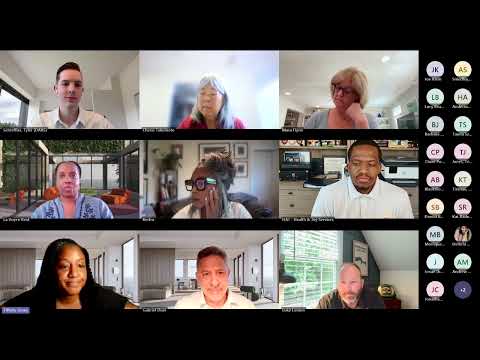
“My name is Tiffany Jones, and I am the Marcus Alert coordinator for Arlington County with the Department of Human Services,” Tiffany Jones said, describing a system that tracks every 911 and 988 behavioral-health call and uses a county-designated number to monitor transfers and outcomes. She said Arlington meets weekly with police, fire and emergency communications staff and monthly with regional partners to review cases where the response could have been improved.
Panelist Gabriel Duer, who oversees mobile crisis services for DHS, described the Crisis Intervention Center (CAC) as a 24/7 clinic with behavioral-health clinicians, peer support specialists and nurse practitioners. “We have now 24/7 nursing services that can do some basic triage to determine if the patient is safe to be seen in that setting as opposed to going to the ER,” he said, and noted the county is working on a sensory room and licensing to store and administer on-site medication.
Committee members repeatedly asked for clear guidance families can use when calling for help. Staff explained the CAD-driven call‑taking protocols used by the emergency communication center and the difference between a 1st‑party caller (the person in crisis), a 2nd‑party caller (a close contact), and a 3rd‑party observer. Panelists said 988 is often the right first call for non‑violent, in‑the‑moment crises because it can dispatch public mobile crisis teams (CR2, REACH) without law enforcement, while 911 may be the route when safety concerns or immediate medical needs are present. Tiffany stressed the systems can transfer calls to one another and that local policy requires coordination with REACH.
Parents raised concerns that any police response leads to removal from the home or handcuffing. County staff and committee members said arrest or transport is not the default. A participant noted that when police do transport someone, handcuffing is a standard transportation protocol in Arlington, which contributes to family fears and underlines the need for continued co‑response training and communication between DHS and police.
Tiffany and other panelists recommended practical steps families can take: enroll in RapidSOS emergency profiles so CAD systems populate critical health information, consider the blue envelope or sunflower lanyard to alert responders to disability needs, and follow up after an incident with support coordinators to develop behavior and crisis‑support plans.
The panel concluded by saying Marcus Alert is still being refined—staff highlighted remaining gaps (24/7 mobile coverage, full access to on‑site psychiatric prescribers) and said workforce and vendor capacity will determine near‑term progress.