Get Full Government Meeting Transcripts, Videos, & Alerts Forever!
Get email alerts on the Library Services topic
No spam. Unsubscribe anytime.
Librarians, community members urge board to restore library positions and invest in information literacy amid AI concerns
Summary
Educators and community members told the board the district is cutting library staff while students need librarian-led information-literacy instruction, especially as AI tools become more prevalent; presenters cited national AI investment figures and urged the district to preserve full-time librarian positions.
Multiple speakers used public comment to press the board about library staffing and the role of librarians in teaching information literacy.
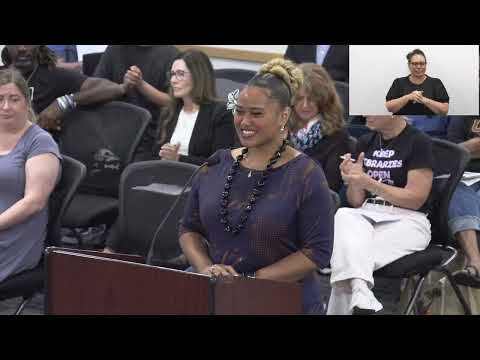
Educator Jamie Bayanos said librarians are essential for teaching students how to evaluate information and described national private-sector AI investment to make the point. "Amazon is spending ... $200,000 of the million, Google $93,000 ... Microsoft $80,000 combined," she said while urging the board not to eliminate dedicated librarian roles. Bayanos and other library staff said the district’s guidance documents were created without consulting school librarians and that a large share of library positions have been cut this year, which they said weakens students’ ability to critically evaluate online sources and AI outputs.
Other commenters — including a recipient of a librarian-of-the-year recognition who spoke of 26 years in school libraries — described libraries as instructional hubs for multilingual students and said cuts (one public comment described a 53% reduction in library staffing in a referenced set) undermine key supports such as full-time librarians, counseling ties, and community partnerships. Speakers asked the board to preserve librarian positions and invest in trained library staff to meet information-literacy needs.
The board did not take action on staffing during the meeting; the budget and ELCAP discussion that followed focused on revenue assumptions and programmatic allocations.