Get Full Government Meeting Transcripts, Videos, & Alerts Forever!
Get email alerts on the Foam Recycling Technology topic
No spam. Unsubscribe anytime.
How Exeter’s Styrofoam densifier works and what residents should expect
Summary
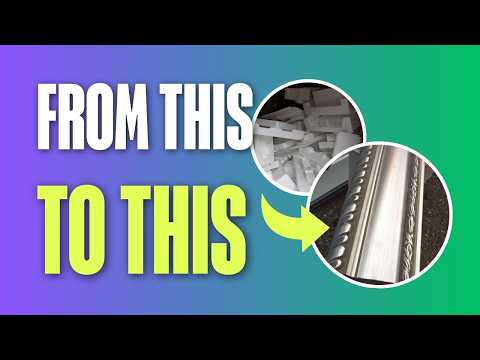
Operators feed rigid Styrofoam into a heated densifier that compacts material into solid bricks, shrinking volume by about 90%; the unit can process roughly six to seven large bags per hour, staff said.
Exeter’s new Styrofoam densifier compresses rigid foam into dense bricks that are easier to store and transport for recycling. A staff member who demonstrated the machine explained the sequence: residents drop off the foam, staff start and heat the machine, feed the material, and collect an extruded solid "ingot" that is shaped into bricks.
The operator said the system produces roughly six to seven large bags per hour, and described a "big bag" as about 6 by 6 by 6 feet; they added that the process "reduces the styrofoam by 90%." Sustainability planner Kristen Murphy said that densifying can give bulky foam a second life and help avoid expansion of landfill capacity.
The transcript does not specify the vendor, final downstream recycler, or whether the compacted bricks will be sold or processed locally. Those operational details were not provided in the meeting remarks and should be confirmed with the town or vendor for full accuracy.