Get Full Government Meeting Transcripts, Videos, & Alerts Forever!
Get email alerts on the Open Solicitation topic
No spam. Unsubscribe anytime.
OWEB staff recommends $15.1M for 67 projects in winter 2026 open solicitation; board debates funding line and below‑line projects
Summary
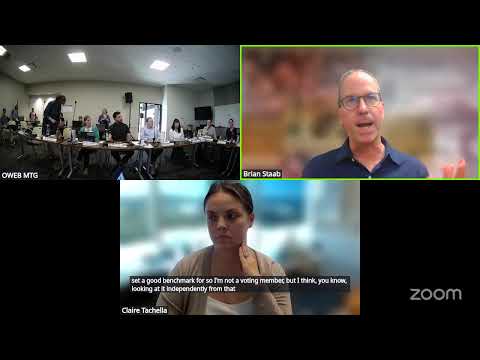
Staff told the board that 113 applications requested ~$27M and that staff recommends funding 67 projects totaling about $15.1M; board members questioned how the funding line is drawn and why some review‑team‑recommended projects were left below the line.
OWEB staff presented the winter 2026 open solicitation recommendation: 113 applications totaling a little over $27,000,000; staff recommended 67 applications totaling about $15,138,008.52 and explained how the regional review teams, anonymous voting tools and a staff facilitation process produce ranked lists and the staff‑drawn funding line.
Liz Redon and other program representatives walked board members through the stair‑step review process: field visits, review teams by region, documentation of strengths and concerns, prioritization and anonymous vote to create ranked lists. Redon emphasized that review teams evaluate by criteria in administrative rule and that staff does not add extra criteria when drawing the funding line, but staff must compare across regions to prioritize across the entire biennium.
Board members asked why strong TA and engagement proposals such as the Warm Springs Valley springs monitoring (project 22751825...) were recommended by review teams but not funded. Staff pointed to evaluation comments that raised clarity issues (e.g., whether existing spring protocols would be used and whether new methods would be transferable) and to the need to pace awards across the biennium; staff noted an extra $500,000 had been programmed into the spending plan for TA across cycles but that cycle‑to‑cycle distribution matters.
During deliberations the board moved one project above the line (Kelly Creek TA) after new partner awards reduced OWEB’s needed contribution. Staff emphasized that moving awards from the next cycle reduces available funds for future solicitations and that applicants below the line can revise and reapply in subsequent cycles.