Get Full Government Meeting Transcripts, Videos, & Alerts Forever!
Get email alerts on the Energy Storage topic
No spam. Unsubscribe anytime.
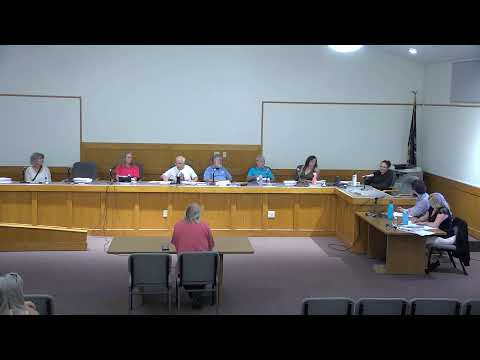
Planning board opens public hearing on proposed battery energy storage facility; safety and noise questions remain
Summary
Company representatives presented a battery energy storage project and the board opened a public hearing. The applicants submitted an updated EAF, emergency-response and decommissioning plans and a letter from Tesla about 40% fan-speed operation; the board requested EAF corrections, fire-department coordination and decommissioning review.
The planning board opened a public hearing for a proposed battery energy storage facility (BESS) associated with a nearby solar field and heard a technical presentation from the developer’s team. Company representatives said they submitted a full environmental assessment form (EAF), a revised emergency-response plan, a stamped decommissioning plan and a letter from Tesla showing the system could operate with fan limits at 40% while meeting safety parameters.
The company’s presenter said they did neighborhood outreach and conducted a site tour, but reported limited direct engagement responses: some neighbors "were for it," one neighbor "was against it," and others were neutral. The team described noise-mitigation measures including a 10-foot acoustic fence and modeled noise levels for the nearest receptor: "the 40% operation you're saying is 35.9 dBA and that is dBA... and then with the barrier, it's 33.9," a staff member read from the noise table. The board asked whether the 40% fan-speed limit can be guaranteed; the developer said Tesla would set a firmware limit as part of the installation contract.
A safety expert, Paul Rodgers, described extensive code and testing work behind BESS systems and said enforcement and training are critical. "This is one of the most regulated industries that I've ever witnessed in my time in the fire service," Rodgers said, adding that codes focus on both prevention and compartmentation to contain an incident.
The board voted to open the public hearing and requested several follow-ups: correct EAF entries that currently read "varies" for dimensions; supply clarifications on average water-table depth and infiltration testing for stormwater basins; confirm decommissioning-bond figures through engineering and legal review; and present any proposed host agreement or town-supervisor discussions about compensation or community benefits. Staff also advised that the local fire department should be involved in training and ongoing coordination.