Get Full Government Meeting Transcripts, Videos, & Alerts Forever!
Get email alerts on the Opioid Settlement topic
No spam. Unsubscribe anytime.
Supervisors accept opioid-settlement reconciliation; request tighter contracts and monthly tracking
Summary
After a multi-hour presentation, the board accepted a reconciliation plan showing opioid settlement funds were commingled with the county's SUD account, approved a restoration schedule to repay about $2.3 million, directed separate fund accounting, stronger contract language, and quarterly reporting to the board.
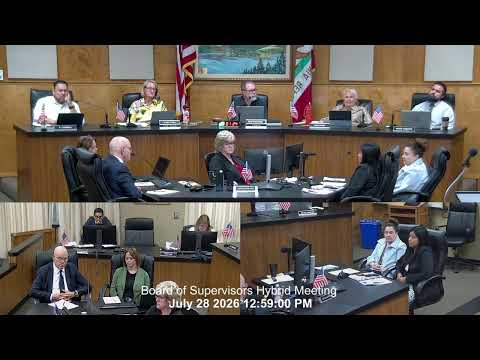
The Lake County Board of Supervisors voted unanimously July 28 to accept a reconciliation and restoration framework for the county's opioid settlement funds after a detailed presentation from Elise Jones, Director of Lake County Behavioral Health Services.
"We have performed an exhaustive reconciliation," Jones said, reporting the county expects to receive about $22 million over the life of the settlement and has received just over $8 million so far. She told the board that OSF dollars were not previously maintained separately in the SUD cash account, that reconciliation identified approximately $2.3 million that needs to be restored, and recommended creating a separate OSF fund and adopting tighter accounting and contractual controls. "One of our next moves will be to request a separate fund for those monies," Jones said.
Supervisors pressed staff on the risk of state audit and possible repayment conditions. "I'm glad that we are catching that," Supervisor Sabatier said, but added she wanted contractual protections so county-funded assets cannot be sold away from the county and asked staff to return with amendments within 30 days. Supervisor Owen urged the county to avoid paying for contractors' assets without county ownership and suggested exploring debt-service approaches to leverage future OSF payments for county-owned facilities.
The board approved two motions by roll call: to accept the reconciliation and restoration framework, and to approve proposed OSF planning categories for budgeting and reporting, both carried 5-0. The board directed Behavioral Health to return with a spending plan before any new discretionary OSF commitments and to provide quarterly reports showing receipts, expenditures, restoration progress and measurable outcomes.
Behavioral Health recommended a conceptual allocation of the funds: roughly 40% to infrastructure expansion, 30% to community-based organization grants, and 30% to county-operated remediation efforts, while cautioning that only about one year of funding is currently secured for multi-year contracts and that additional amendments are expected as further settlement payments arrive. Jones also noted the department will seek admin costs to cover heavy implementation burdens.
The board asked the CAO to work with Behavioral Health and County Counsel on stronger contract language to protect county investments, and to set up a dedicated OSF ledger. Several contract recipients — including Kanokitai Native Wellness — said they are willing to amend agreements to address county concerns. The board set a follow-up timeline for monthly or quarterly reporting and committed to revisit governance language by January 2029 as part of routine plan review.
The board did not take immediate punitive actions; it emphasized protection of existing community programs and asked staff for options to accelerate restoration if additional revenue becomes available.