Get Full Government Meeting Transcripts, Videos, & Alerts Forever!
Get email alerts on the Ethics Investigation topic
No spam. Unsubscribe anytime.
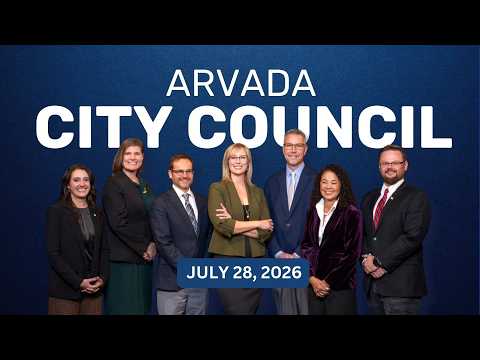
Arvada council recuses member Davis, moves to dismiss one ethics complaint and schedule a hearing on another
Summary
In a specially called business meeting, Arvada council voted unanimously to recuse Council member Davis from consideration of the matters, to draft a resolution dismissing the 04/13/2026 ethics allegation for a technical deficiency, and to set a hearing on the 07/13/2026 investigation after staff recommended next steps under the code of ethics.
The Arvada City Council met in a brief special business meeting July 28 to determine next steps on two pending ethics investigations. Special counsel Corey Hoffman told the council the code of ethics process allows counsel to dismiss a matter if it is more likely than not that no violation occurred or to set a hearing if counsel finds a violation is more likely than not.
Council member Davis was recused from the item after the council concluded she had a personal stake; the mayor recorded the recusal as 6–0. Davis told the council she had been surprised by the meeting and asked to be on the record that she had not received information about next steps, saying, “I would like to be on the record that I have not received, information on next steps moving forward.”
Council member Ambrose moved that staff draft a resolution for council consideration on Aug. 18 finding that the allegation in the April 13, 2026 investigation should be dismissed because of a technical deficiency; the council passed that motion 6–0. Ambrose then moved that staff draft a resolution finding it is more likely than not that a violation occurred in the July 13, 2026 investigation and to direct that the matter be set for a hearing under the Arvada code; that motion also passed 6–0.
Hoffman framed the process under the Arvada code of ethics (cited in meeting discussion as section 2-3-75 and procedures in 2-3-78): counsel first reviews an initial investigation from a disinterested third party to determine whether a hearing is appropriate. If counsel finds the ‘‘more likely than not’’ threshold is met for a violation, a hearing may be scheduled; otherwise counsel may dismiss the complaint.
The council did not take a hearing-level action at this meeting; it directed staff to prepare the two resolutions and agreed to consider them at the Aug. 18 business meeting. The council closed the special business portion and proceeded to its scheduled workshop.