Get Full Government Meeting Transcripts, Videos, & Alerts Forever!
Get email alerts on the Land Use Special Use topic
No spam. Unsubscribe anytime.
Council approves special‑use permit for 224 East Central, limits residents to 80 and requires evergreen screening
Summary
The Andover City Council approved a special‑use permit allowing an intermediate care facility at 224 East Central with two overriding conditions: a maximum resident census of 80 and a requirement to install year‑round evergreen screening. The decision followed hours of public comment and council debate about evidence, safety and legal limits on conditions.
The Andover City Council voted to approve a special‑use permit on a quasi‑judicial application to allow an intermediate care facility at 224 East Central, subject to two conditions: a cap on the resident census at 80 and installation of year‑round evergreen screening along the north property line.
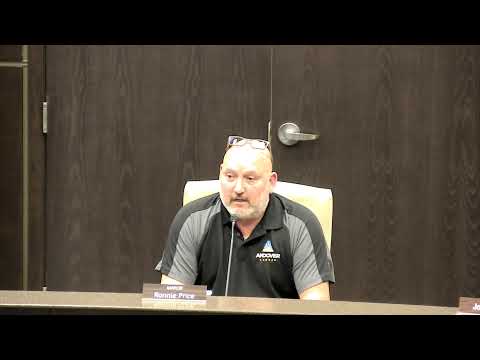
Supporters and neighbors filled the public forum with competing views during the council’s hearing. Ben Elliott, who spoke during the public comment period, urged the council to apply the legal standard strictly, asking, “Has the applicant proven its case or only asserted it?” He argued that the record lacked traffic or operational studies tied to the operator and site. The applicant’s representative told the council that residents would be screened, escorted for outside time, and that the facility would use controlled access, alarmed doors and cameras to limit unsupervised movement.
Council debate focused on whether to override the planning commission’s recommendation (which had been for approval with no conditions) and, if so, which conditions were lawful. The city attorney advised that some proposed restrictions — for example, banning outpatient services or conditioning operation solely on voluntary status — could raise legal or discrimination concerns, while density limits and landscaping buffers were more likely to be permissible. The council amended the motion to keep only two conditions (resident cap and evergreen screening), seconded the amendment, and voted to approve the permit. The presiding officer announced the special use was approved; the council noted that affected parties have 30 days to appeal the decision to district court.
Supporters at the podium described the facility as meeting an unmet local need and said staff would follow state licensing and accreditation standards. Opponents and nearby residents raised concerns about security, proximity to schools and clinics, and whether assurances in testimony would be enforceable if the property changed hands. The council’s final action requires the applicant to plant screening and operate within the stated resident limit unless it seeks and obtains an amendment to the special use.
The council’s action concluded the hearing for Case Z‑SU26‑0002. The city attorney summarized legal options and the record; the clerk noted communications and a protest petition were part of the record but that the petition was not legally sufficient.