Get Full Government Meeting Transcripts, Videos, & Alerts Forever!
Get email alerts on the Duwamish Displacement topic
No spam. Unsubscribe anytime.
Duwamish Valley groups urge no upzones until demolition controls, tenant purchase rights and land banking are law
Summary
Representatives from the Duwamish Valley and South Park pressed the council to sequence anti‑displacement protections before allowing upzoning, asking for demolition controls, tenant opportunity‑to‑purchase rights, land banking and restrictions on MHA changes in high‑risk areas.
Speakers representing the Duwamish Valley warned the committee that upzoning without legally enforceable anti‑displacement measures risks accelerating the displacement of longtime residents.
Alexandra Johnson, senior policy analyst with the Duwamish River Community Coalition, told the committee that South Park and Georgetown "are being asked to absorb significant new density" while carrying high environmental burdens and low median incomes. She asked the council to ensure that "no up zone takes effect in high displacement areas until NOA demolition controls, tenant opportunity to purchase rights, and community benefits agreements are already in law," and recommended land banking and nonprofit‑restricted affordable overlays.
Multiple commenters from South Park and the Duwamish Coalition echoed these points, urging stronger sequencing and more transparency about which projects would carry fee burdens if MHA were altered. Paulina Lopez (Duwamish Community Coalition) asked the committee to "center living experience and to stop displacement to protect our neighbors," and requested better interpreter access during committee proceedings.
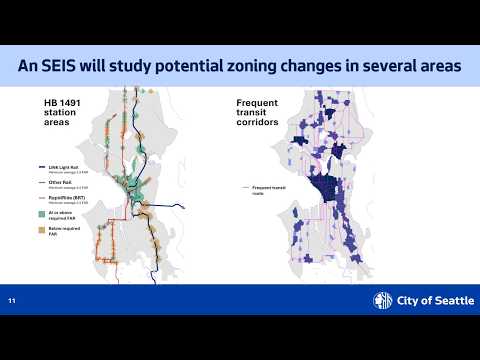
OPCD staff said the SEIS will examine mitigation options and that one alternative could limit upzoning in areas identified as high displacement risk, while non‑zoning tools such as land banking and targeted funding would be presented as a menu of options. The department also noted coordination with the Office of Housing and county partners to align production and preservation strategies.