Get Full Government Meeting Transcripts, Videos, & Alerts Forever!
Get email alerts on the Regional Governance topic
No spam. Unsubscribe anytime.
Harwich officials press county on Cape Cod Commission role and limits on 40B oversight
Summary
Select‑board members and commissioners debated whether the Cape Cod Commission or the county can address impacts of 40B comprehensive permits; officials urged coordinated outreach and possible legislative steps to clarify authority.
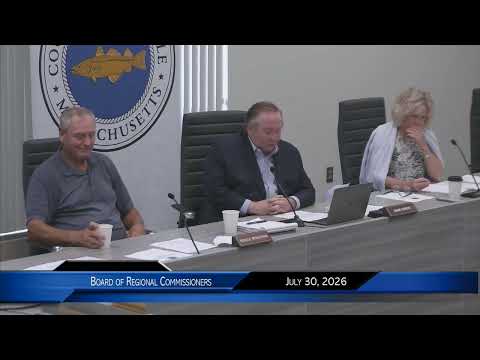
Harwich select‑board members used a county visit July 30 to press commissioners about the Cape Cod Commission's authority over 40B comprehensive permits and to ask whether the county could lead a regional lobbying effort.
A Harwich select‑board member described a recent discretionary referral request to the Cape Cod Commission for a North Harwich project that was denied. Commissioners and staff explained that, under current statute, the commission does not have direct regulatory authority to stop 40B permitting and that many decisions still rest at the town level or through the state framework. "Their denial was not because they just didn't want to deal with it — by statute they don't have the right to regulate that type of project," a select‑board member said.
Commissioner Ron Bergstrom and others suggested two paths out of the perceived bind: (1) towns could increase their affordable housing to exceed the thresholds that trigger 40B pressure, or (2) a legislative solution could extend the Cape Cod Commission's jurisdiction — an option some towns have pursued and others are considering. Commissioners said they will follow up with a charter review and invite towns to participate in county‑led and municipal‑leader conversations.
Why it matters: The exchange makes explicit tension between local control, regional planning authority and state housing law (40B). Harwich officials asked the county to help translate local concerns into regional strategy, including outreach to legislators, vetting whether a statutory fix is possible and clarifying where county support and data can help towns respond.