Get Full Government Meeting Transcripts, Videos, & Alerts Forever!
Get email alerts on the Growth And Water topic
No spam. Unsubscribe anytime.
Harwich residents urge county to address 'carrying capacity,' water stress and local control
Summary
Residents and local officials told Barnstable County commissioners that rapid, denser development and 4‑story projects risk Cape Cod's sole‑source aquifer, infrastructure and village character, and urged stronger regional assessments before projects proceed.
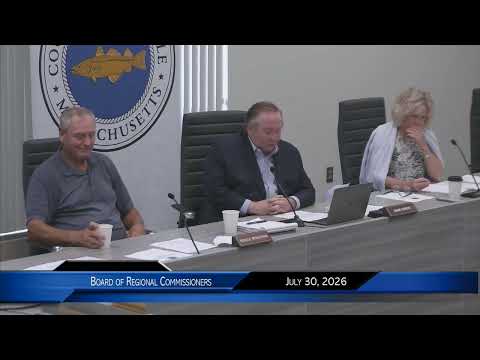
Residents of Harwich told Barnstable County commissioners on July 30 that the region needs coordinated action to protect limited water resources and preserve local control over land use.
Sally Urbano, a Harwich resident, told the joint meeting: "We do not want the state taking over our zoning or dictating how much and what type of housing we must build." She urged the commissioners to support towns in preserving local control while addressing "carrying capacity," a term she said captures the peninsula's limits for growth and its impact on the sole‑source aquifer.
Eric Schwab, a Hyannis building commissioner and Barnstable Housing Authority commissioner, pressed the county for clearer data: "We would like very much to understand what are your capabilities? What are you able to do now to help the towns understand the challenges we face in protecting our water?" Schwab cited Long Pond's reduced recharge and local concerns about the Herring River as examples of stress on regional supplies.
Mark Forrest, chair of the Barnstable County Commission, responded that the county collects regular input from town departments (for example, harbor masters and dredge advisory committees) and said the county is pressing the state delegation to secure dredging funds and other support. Commissioners acknowledged limitations in regulatory authority—particularly around 40B comprehensive permits—and encouraged towns to pursue local planning tools while working with the county and Cape Cod Commission to coordinate policy and outreach.
Why it matters: speakers warned that without better regional assessments and shared data, new large‑scale projects risk cumulative harm to drinking water, traffic, and the region's character. The commissioners said they would continue the conversation and consider follow‑up meetings and more focused engagement with town officials and municipal coalitions.