Get Full Government Meeting Transcripts, Videos, & Alerts Forever!
Get email alerts on the Nuclear Energy topic
No spam. Unsubscribe anytime.
Industry leaders tell Utah audience nuclear can deliver energy, jobs and supply-chain growth
Summary
Industry executives and a city mayor told a State of the State panel that Utah could host parts of a domestic nuclear fuel supply chain, arguing for community engagement, workforce training and policy steps to accelerate small modular reactor deployment.
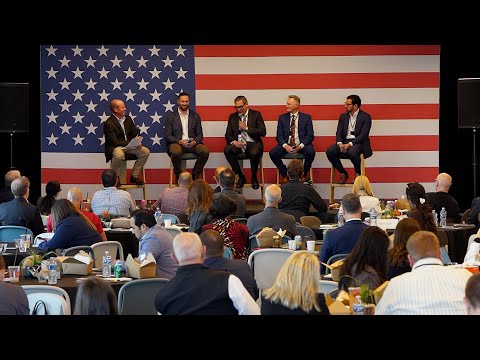
Moderated at a State of the State panel, industry and local officials laid out a case for boosting nuclear energy and associated manufacturing in Utah.
Drew DeWalt of General Matters said the industry is experiencing a ‘ground shift’ as large energy users seek dispatchable power. “You can imagine a future where Utah pulls out of the ground, does the processing, fuel fabbing, and puts it into reactors in the state,” DeWalt said, arguing for federal and state support to repatriate enrichment and fabrication services.
Mark Chalmers, President and CEO of Energy Fuels, described Utah’s White Mesa Mill as a functioning piece of national supply-chain infrastructure and said his company is ramping uranium production in the state. “The White Mesa Mill… is the only remaining operable mill left in The United States,” Chalmers said.
Mayor Tom Westmoreland of Eagle Mountain said municipal leaders are preparing residents for conversations about siting and benefits. “Bring your fears, bring your questions, bring your concerns,” Westmoreland said, adding that local planning must account for jobs, water and energy as the city grows.
Rick Springman of Holtec said Holtec is assessing sites and partners in the Intermountain West and emphasized project delivery and manufacturing potential in Utah, including workforce development needs.
Panelists urged early community engagement, clear workforce pipelines from high school through vocational and higher education, and steady policy to attract long-term industry investment. The session closed with a call for the state to use targeted incentives and streamlined permitting to keep momentum over the next 12–18 months.