Get Full Government Meeting Transcripts, Videos, & Alerts Forever!
Get email alerts on the Workshop Action Plan topic
No spam. Unsubscribe anytime.
Rockport workshop outlines immediate steps to speed workforce housing
Summary
At a community housing workshop, Rockport officials and residents prioritized zoning tweaks, a wastewater feasibility study, MCOG assistance and a housing‑production dashboard as immediate actions to accelerate workforce housing, while debating targets and regional coordination.
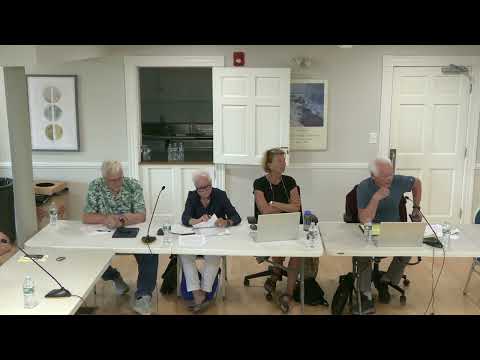
Jeff opened Rockport’s second housing workshop and framed the town’s objective: speed housing production while shaping what kinds of housing the town wants. He said the workshop’s agenda included identifying barriers — construction costs, infrastructure and wastewater limits — and drafting specific, measurable actions to send to the select board.
“We need to decide on those amendments tonight…to get ordinance amendments before the voters in November,” Jeff said, asking the planning board to prepare recommended changes. Organizers proposed immediate steps including directing the planning board to initiate lot‑size reduction, commissioning a wastewater feasibility study estimated at $15,000–$30,000, requesting MCOG assistance for CDBG applications, and launching a public housing production dashboard to track permitted, under‑construction and completed units against the 200‑unit-by‑2030 target.
Why those items? Speakers repeatedly returned to two constraints. Jeff, an architect who frequently works with local projects, said construction price escalation and labor shortages were primary obstacles: “The cost here says 500 to 600 per square foot for stick built units,” he said, calling stick‑built single‑family housing “unattainable as far as workforce housing.” The other constraint is sewer and general infrastructure: private septic requirements and per‑lot rules create startup costs and lot‑size limits that can make development infeasible without sewer access.
Workshop participants agreed to a two‑track approach: pursue local, near‑term ordinance fixes (height, lot coverage, parking, staff review thresholds) while also exploring strategic steps (land acquisition or a municipal development corporation, targeted TIFs, and regional coordination through MCOG). John, who led much of the discussion, urged both local action and careful coordination with regional partners: “We could wait and try to do something more global, but I think that's a lot of time…and I'm more impatient,” he said.
Next steps recorded in the workshop included directing staff to prepare ordinance language for the planning board, commissioning a packaged wastewater feasibility study, asking MCOG to help identify CDBG cycles and qualifying projects, and setting up a dashboard to publicly monitor progress toward the town’s production target.