Get email alerts on the Early Childhood Education topic
No spam. Unsubscribe anytime.
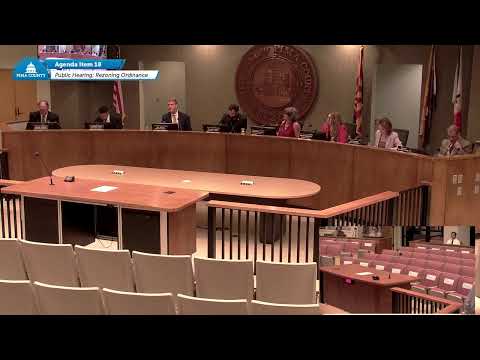
Board debates how to cut 630-child waitlist for Pima Early Education Program (PEEPS)
Summary
Supervisors discussed options to reduce a roughly 630-child waitlist for Pima County's PEEPS early-education program, weighing one-time contingency spending, a sliding-fee scale, private fundraising, and a multi-year plan; county administration said current annual support is $10,750,000.
County staff told the Board of Supervisors the Pima Early Education Program (PEEPS) currently receives $10,750,000 a year from the county, and that demand outstrips capacity: the board heard a figure of about 630 children on the program waitlist.
"At this point, we, the county is providing $10,750,000 a year for early education," Administrator Lesher said while introducing a memorandum on funding options. Board members discussed short-term and multi-year responses, including: allocating one-time contingency funds to preserve existing scholarships; funding additional classrooms through districts; forming a nonprofit fundraiser like "Friends of PEEPS" focused exclusively on early childhood education; and pursuing public–private matching funds.
Supervisors debated trade-offs. Supervisor Hines noted the county could consider raising the library-district property-tax allocation (as was done previously for housing) and suggested matching private funds, while Supervisor Scott urged a three‑year plan and fuller data on waitlist distribution before committing one-time contingency dollars. Estimates discussed at the dais put the full cost to eliminate the waitlist in the $7–9 million range; one board member proposed a one-time general-fund contingency allocation of $1,587,600 to cover approximately 126 scholarships in the near term.
Staff said it would return with more refined options, updated waitlist figures and costed scenarios for a multi-year plan and recommended stakeholder outreach with business and nonprofit partners. The board requested additional memos on: detailed rural/urban distribution of the waitlist, the cost per scholarship, and proposals for private-sector matching or a new nonprofit vehicle.
AI generated
The text on this page is AI generated. Summaries, highlights, analysis, and video transcripts are all produced from the original source material.
AI can make mistakes, so if you spot one, and we will fix it for everyone.
Note: the source content is unaltered by us. Any content source we link to, be it a video, an audio recording, or a document, is presented exactly as its publisher released it. That publisher is usually a government body, sometimes an individual official or another organisation.