Get Full Government Meeting Transcripts, Videos, & Alerts Forever!
Get email alerts on the Early Childhood Education topic
No spam. Unsubscribe anytime.
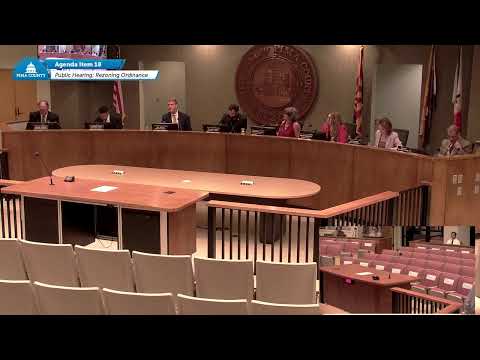
Board debates how to cut 630-child waitlist for Pima Early Education Program (PEEPS)
Summary
Supervisors discussed options to reduce a roughly 630-child waitlist for Pima County's PEEPS early-education program, weighing one-time contingency spending, a sliding-fee scale, private fundraising, and a multi-year plan; county administration said current annual support is $10,750,000.
County staff told the Board of Supervisors the Pima Early Education Program (PEEPS) currently receives $10,750,000 a year from the county, and that demand outstrips capacity: the board heard a figure of about 630 children on the program waitlist.
"At this point, we, the county is providing $10,750,000 a year for early education," Administrator Lesher said while introducing a memorandum on funding options. Board members discussed short-term and multi-year responses, including: allocating one-time contingency funds to preserve existing scholarships; funding additional classrooms through districts; forming a nonprofit fundraiser like "Friends of PEEPS" focused exclusively on early childhood education; and pursuing public–private matching funds.
Supervisors debated trade-offs. Supervisor Hines noted the county could consider raising the library-district property-tax allocation (as was done previously for housing) and suggested matching private funds, while Supervisor Scott urged a three‑year plan and fuller data on waitlist distribution before committing one-time contingency dollars. Estimates discussed at the dais put the full cost to eliminate the waitlist in the $7–9 million range; one board member proposed a one-time general-fund contingency allocation of $1,587,600 to cover approximately 126 scholarships in the near term.
Staff said it would return with more refined options, updated waitlist figures and costed scenarios for a multi-year plan and recommended stakeholder outreach with business and nonprofit partners. The board requested additional memos on: detailed rural/urban distribution of the waitlist, the cost per scholarship, and proposals for private-sector matching or a new nonprofit vehicle.