Get Full Government Meeting Transcripts, Videos, & Alerts Forever!
Get email alerts on the Stormwater Utility topic
No spam. Unsubscribe anytime.
Presenter outlines stormwater utility proposal to fund aging storm sewers
Summary
A consultant presented a stormwater utility study recommending an equivalent-residential-unit (ERU) fee to address aging storm infrastructure; the draft suggests about 2,764 ERUs and an illustrative fee of about $5 per month, with credits and public outreach to follow.
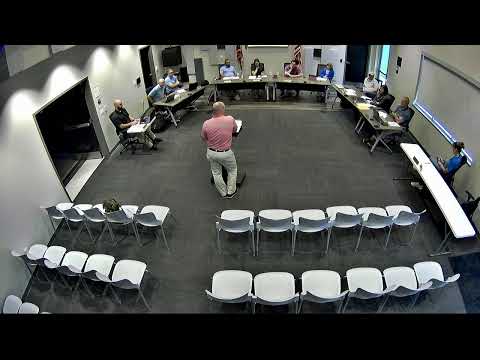
Randy, the presenter, told the council the stormwater utility study is intended to generate stable revenue to repair and maintain aging storm sewers and to help the village compete for grants. "This is basically saying, rainwater's gonna fall on your property," Randy said, explaining that impervious area drives the billing methodology.
Randy said the study calculated an average equivalent residential unit (ERU) of about 2,650 square feet and estimated roughly 2,764 ERUs across the community. He described a sample fee framework in which a $5 monthly charge per ERU would generate an estimated pool of revenue to supplement the general fund and leverage grant dollars; the study packet includes alternative fee scenarios between about $5 and $10 a month. Randy added that credits are possible for properties that treat stormwater on-site, noting the draft allows up to a 50% credit in some cases.
Council members discussed billing logistics and fairness considerations; Randy said billing would most likely be done quarterly on the existing trash bill to reach most residents. Members pressed for clarity on how credits would interact with county assessments (for some developments that already pay a county ditch maintenance assessment) and whether new development would receive full credits when public infrastructure is involved. The presenter said staff and consultants will refine the draft, coordinate with the county and Ohio EPA requirements, and prepare public education materials before any decision is taken.
The council did not take a vote on the utility but agreed there was merit to continue the study and to prepare outreach materials for residents.