Get Full Government Meeting Transcripts, Videos, & Alerts Forever!
Get email alerts on the Air Quality Health topic
No spam. Unsubscribe anytime.
Compton workshop spotlights petroleum odors; residents demand health study and continuous monitoring
Summary
Students and residents described nosebleeds and headaches from recurring petroleum odors tied to World Oil Recycling and urged the city and state agencies to fund independent air monitoring and a public health study. AQMD, DTSC and county public health said investigations and inspections are ongoing.
The City of Compton convened a public workshop where residents and students described repeated petroleum odors they said have made life and learning difficult and urged immediate action.
"I have already 12 I had 12 nosebleeds," student Allison Salas said, asking the council for a public health report that explains what children and families are inhaling and how repeated exposure could affect health. Resident Aaron Diaz told the council the problem has persisted for years and after a May 21 fire "those concerns only grew stronger," urging an independent monitoring system that "continuously measures the chemicals in our air" and not just complaint-driven responses.
The workshop brought representatives from the South Coast Air Quality Management District (AQMD), the Department of Toxic Substances Control (DTSC) and the Los Angeles County Department of Public Health to answer questions and outline next steps. AQMD said it has performed scores of inspections and issued multiple Notices of Violation; DTSC described an ongoing enforcement investigation and a temporary authorization tied to decommissioning a large wastewater tank; county public health detailed avenues for residents to report symptoms and receive health guidance.
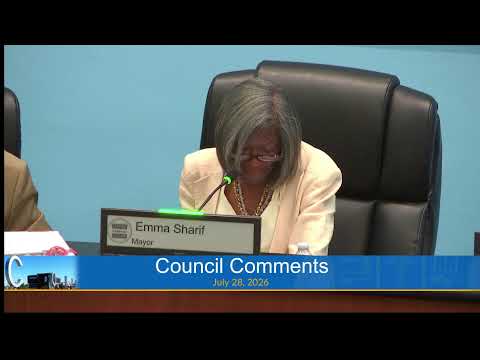
Mayor (S1) told residents the city is coordinating with state and county agencies and asked staff to return with specifics about air filters for schools and the nearest monitoring-station locations. AQMD and DTSC representatives committed to follow up with contact information and documentation for the council and community.
Why it matters: Residents described immediate health effects and a loss of confidence in routine permit renewals. Council members and residents requested clearer, independent data on what chemicals are present, where pollution originates and what protections are available for children near schools and parks.