Get Full Government Meeting Transcripts, Videos, & Alerts Forever!
Get email alerts on the Deployment Results topic
No spam. Unsubscribe anytime.
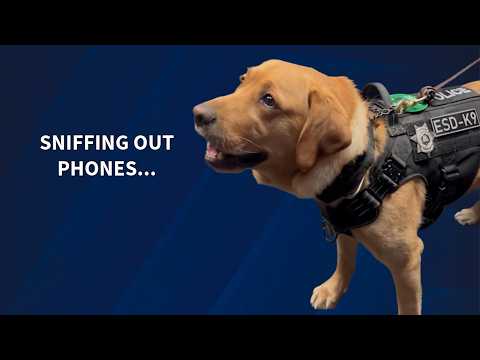
DOC handler outlines deployment routine; Glitch has located 26 devices in nine field searches
Summary
AP&P handler Josh Paxman described daily search routines, safety checks, and reset protocols; he reported nine deployments with 26 devices found so far and clarified that device possession only constitutes a violation if a supervision condition specifically prohibits it.
Josh Paxman described a typical deployment routine for electronics-detection K-9s: team planning, safety walkthroughs of residences, bringing the dog in only after hazards are cleared, running search commands, and resetting the dog to keep it in work mode during detailed searches.
"Typically, we plan out a day with some of the guys on the *** offender caseload, and we pick 5 or 6 houses," Paxman said, outlining how handlers coordinate with case agents and perform walk-throughs to reduce distractions. He said Glitch is a passive-indication dog that will sit or lie down on a find and then be asked to "show me" to pinpoint the exact device.
Paxman reported early results: "I have deployed Glitch 9 separate times. We found a total of 26 devices so far." He clarified that finding a device does not automatically mean a violation — possession is only a rules violation when a person's supervision conditions specifically prohibit such electronics — and that agents inspect devices for illicit content when warranted.