Get Full Government Meeting Transcripts, Videos, & Alerts Forever!
Get email alerts on the Solar Project Application topic
No spam. Unsubscribe anytime.
Neighbors urge denial of Mackinac-area solar special-use permit over erosion, runoff and safety concerns
Summary
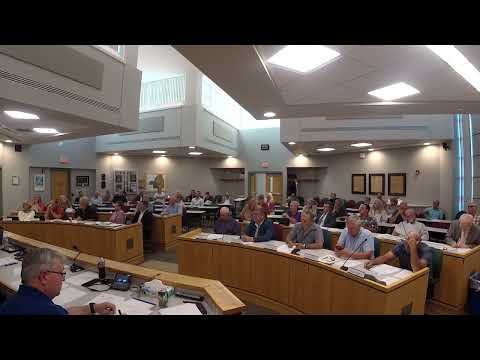
Three nearby residents told the Tazewell County board the proposed 5 MW Schlatt B Solitude Solar 1 would harm streams and wildlife, increase erosion on sloping ground, and pose cleanup and safety risks after extreme weather; they asked the board to deny the special-use permit.
Allen Green, who identified himself as a Logan County zoning officer and planning director, told the Tazewell County board that the special-use permit application for the proposed Schlatt B Solitude Solar 1 was incomplete and failed to meet state and county requirements. "Regardless, this project does not meet the state or county requirements and should be denied," Green said, and he noted the same development had been denied by the county eight years earlier and that the Zoning Board of Appeals voted unanimously to reject the application.
Neighbor Susan Nelson described the parcel as steeply sloped and said runoff from the site flows into a spring-fed stream that passes through her family's property and into Heritage Lake. "If there's ever a fire or a tornado ... the charred ash covered remnants of the solar farm... create highly toxic runoff," Nelson said, asking the board to "vote no on the special use permit." Mike McNamara, whose property sits across the road from the proposed array, said tornado tracks have passed near the site and cited photos from a prior tornado that left glass and debris scattered across fields. "I don't want to walk in a creek full of glass or chemicals," McNamara said.
Speakers raised site-specific concerns: they said the parcel was terraced and highly erodible (contradicting application text that described the land as flat), warned that broken photovoltaic modules could spread glass and heavy-metal-containing material into streams, and said the project's road and access conditions presented safety risks. Allen Green also challenged an attorney's letter from the applicant that, he said, addressed only vegetative screening and failed to respond to other negative findings of fact raised at the ZBA and land-use committee hearings.
The public commentators framed their remarks as factual objections—application incompleteness, flood and runoff pathways, tornado-track proximity and cleanup uncertainty—rather than policy endorsements. They asked the board to follow the ZBA and land-use committee recommendations and deny the permit or delay action until outstanding issues are resolved.