Get Full Government Meeting Transcripts, Videos, & Alerts Forever!
Get email alerts on the Traffic Analysis topic
No spam. Unsubscribe anytime.
Developer and traffic consultant say townhome plan produces only small peak‑hour impact
Summary
The applicant's traffic consultant told the Robbinsville Land Use Board that the technical study modeled existing and proposed uses — including Dolce Clemente and Keller Williams — and concluded eight townhouses would add only a 'handful' of peak‑hour trips; the consultant also said the site proposes parking in excess of ordinance minimums.
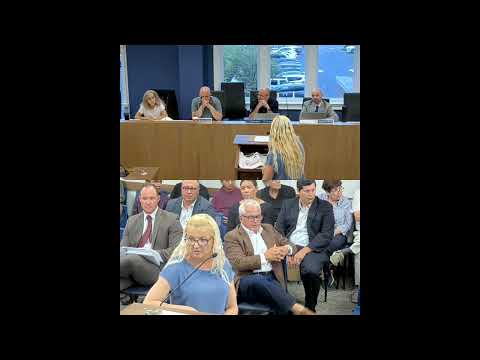
During the Shar Bell application hearing, project traffic consultant Nick Verderes summarized the technical basis for the applicant's request, saying the traffic analysis dated 01/05/2026 compared existing and future conditions, included planned retail tenants and concluded that eight stacked townhouses generate minimal peak‑hour demand.
"We talked about at the last meeting about how much traffic 8 townhouses generates. It's a handful of trips in the peak hour," Verderes said, describing how the study looked at before-and-after traffic volumes and included Dolce Clemente and Keller Williams in the model. He also noted the project team obtained a NJDOT letter of no interest for the Route 33 driveway and asserted county approval was obtained for the Robbinsville Edinburgh Road access.
On parking, Verderes testified the ordinance requires between 64 and 84 spaces for the mixed commercial/residential combination and the project proposes 99 spaces, which he described as 15 above the modeled maximum. He also explained adjustments to guest parking and EV/ADA stalls that the applicant agreed to provide based on professional comments.
Board members and residents challenged the assumptions — arguing the consultant did not adequately reflect the occupancy and usage patterns of the existing Union Lofts building or the effect of a not-yet-open market — but the applicant maintained the model accurately reflected expected trips for the eight-unit scheme. The board weighed the technical testimony against residents' safety concerns and ultimately voted to deny the application.