Get Full Government Meeting Transcripts, Videos, & Alerts Forever!
Get email alerts on the Data Centers topic
No spam. Unsubscribe anytime.
Ashland commission approves first reading of strict zoning rules for data centers
Summary
The City of Ashland approved first reading of a zoning text amendment that would restrict data centers to I-2 industrial zones, cap building size at 50,000 sq ft, set a 1,500-foot setback from residential areas, and impose a 55-decibel noise limit measured at the property line.
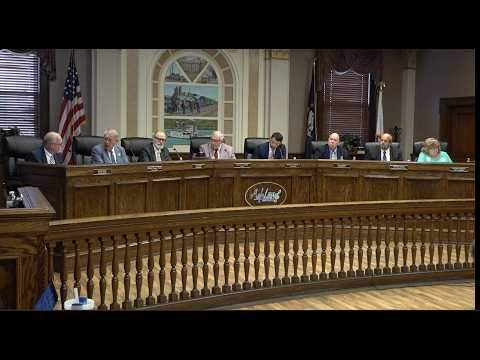
The Ashland City Commission voted to approve first reading of a zoning text amendment that imposes detailed limits on where and how data centers may operate inside city limits.
City Manager Chris Pullum presented the amendment and told commissioners it "defines the data center, its energy systems, the entire site, and all supporting infrastructure," and said the measure bundles related parcels so applications cannot be considered piecemeal. The text would allow data centers only as a conditional use in I-2 zones, cap a facility at 50,000 square feet, set a maximum building height of 45 feet, require a 1,500-foot setback from the closest residential zone, and cap operational noise at 55 decibels measured at the property line.
The amendment also requires applicants to show utility capacity (including electricity and water), submit pre-construction noise studies, use closed-loop liquid cooling, limit diesel backup-engine testing to prescribed hours (the proposal cites 55 hours annually), and post financial assurance (bond or letter of credit) and a decommissioning plan. Pullum said the Board of Zoning Adjustments (BZA) will review conditional-use permits and that the city may hire outside experts at the applicant’s expense to evaluate proposals.
Commissioners cited the need to balance economic development with residents’ health and property protections. Commissioner (speaker 4) praised the planning staff and city planner Catherine Utzinger for compiling model language from other jurisdictions to craft a restrictive, measurable framework. Public testimony and questions from nearby counties focused on site acreage, floodplain constraints and whether independent third-party engineering reviews would be required.
The commission voted in favor of the first reading by voice vote. The ordinance will proceed through the required public-notice steps and BZA review before any conditional-use permit can be issued.